
Guide
When a Spring Goes in Cold Weather in Gurnee
Gurnee's 1980s-90s garage doors run original torsion springs into cold moderate winters. Here's what actually happens to that steel and what a broken spring costs to fix.
Local detail
The Seasonal Bit
Every winter we get the same run of calls: door won't budge, or it slammed down on its own. Cold doesn't break springs by itself, but it's the trigger that finishes off a spring that was already near the end of its life. Steel loses flexibility as it gets colder, and a spring that's cycled up and down for three decades has microscopic cracks in the coil that a warm summer never bothers. Drop the temperature overnight and that same coil can't absorb the stress anymore.
It lets go, usually on the first cold snap of the season, usually early in the morning when the door hasn't moved in eight hours and the steel is at its stiffest. We don't get more calls because Gurnee winters are unusually harsh - we get more calls because the housing stock here is old enough that a lot of original springs are sitting right at that failure line when the cold arrives. It's a timing problem as much as a weather problem, and the two together are what fill our schedule from November through February.
The area
What Is Going On
Houses in this service area mostly went up between 1946 and 2009, with the median build year landing around 1986, and most of the 53 named areas we cover are solidly 1980s and 90s construction. That matters because a torsion spring has a rated cycle life, and a spring installed when a house was built in, say, 1988 has had over three decades to burn through those cycles - roughly two openings a day, every day, since Reagan was in office. Nobody replaces a spring on a schedule.
It gets replaced when it breaks. So the springs failing in Gurnee garages this winter are, in a lot of cases, the same springs that went in with the original door. Cold weather doesn't age the spring - the last thirty-plus years did that.
Cold weather is just the moment the fatigue that's already there stops being tolerable. That's why breaks cluster in cold months even though the spring's true wear happened gradually, one open-close cycle at a time, all year, every year, since the house was new.
What we find
What Local Conditions Do
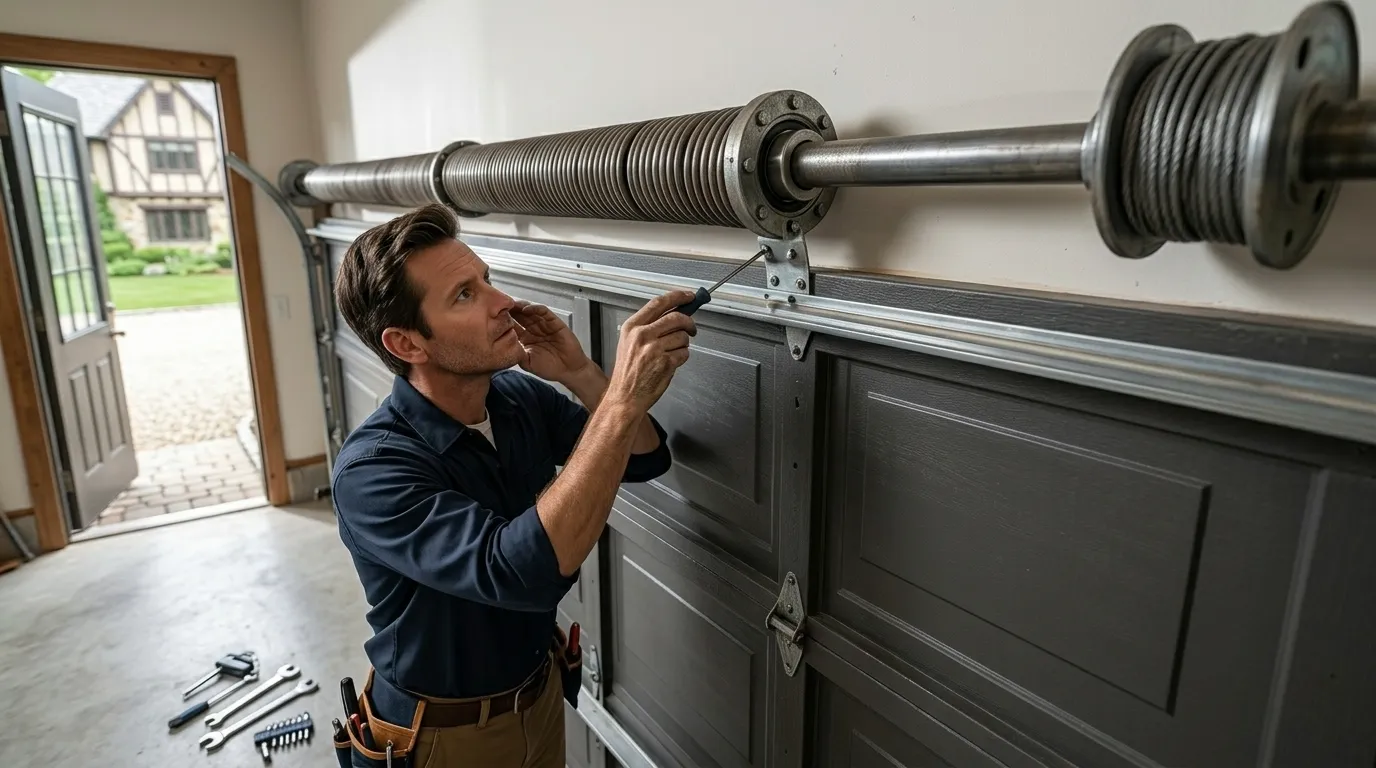
Gurnee sits in a cold moderate climate band, and that's the specific detail that turns an old spring into a January service call. Steel wire under torsion stiffens as temperature drops, and a spring already carrying decades of fatigue has less margin to handle that stiffening before a coil snaps. It's not a dramatic weather event - no storm, no ice - just an ordinary cold night doing what it does to metal that's already tired.
With about 90,406 owner-occupied houses across this service area, a large share of them still running the original spring from a build year in the 1980s or 90s, that combination of age and climate band is what drives the winter pattern we see. It plays out the same way in the towns right around us - Park City, Gages Lake, and Grandwood Park sit in that same cold band and share the same build era, so their garages fail on the same kind of morning ours do. It's a regional pattern, not a Gurnee-specific fluke, but it's real and it's predictable.
How we work
What It Costs
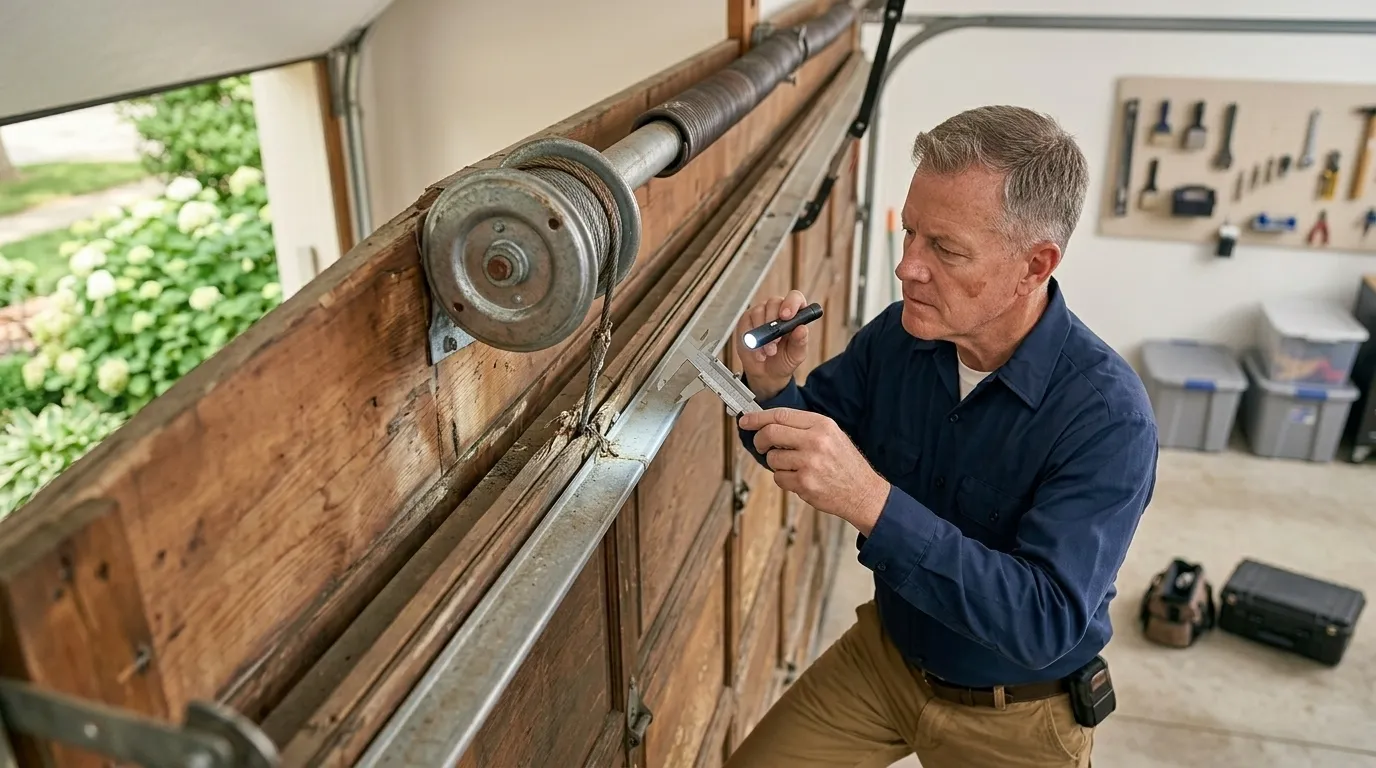
We don't have a fixed number to put in front of you here, and giving you a made-up one would be worse than saying nothing. What we can tell you is what drives the cost: single spring versus a matched pair, the size and weight of the door, and whether the drums, cables, or bearings went with it - which happens more often on a spring that broke rather than one that was replaced ahead of time. A spring that's been quietly wearing out for thirty years often takes a cable or a bent track down with it when it finally lets go, and that adds to the job.
One honest limitation: if your opener, track, and hardware are all original from the 1980s or 90s too, a spring swap alone may not be the last call you make that winter. Sometimes replacing more than the spring up front costs less than three separate visits.
Questions
Common questions
Why did my spring break on the coldest morning of the year?
Cold doesn't cause the damage, it just removes the last bit of flex a worn spring has left. If your spring is original to a house built in the 1980s or 90s, it's already near the end of its cycle life. A cold night is often just the moment that shows.
Is this a Gurnee-specific problem or does it happen everywhere?
It happens anywhere with our combination of older housing stock and a cold moderate climate. Nearby areas like Gages Lake and Grandwood Park share that same build era and climate band, so we see the same winter pattern there too.
Should I replace both springs if only one broke?
Depends on the age and condition of the other one. If both went in at the same time thirty-some years ago, the second one is usually close behind. We'd look at the actual spring before telling you which way to go.
Can I just wait until spring to fix it?
A broken spring means the opener is carrying the full weight of the door, which strains the motor and can damage the trolley or drive gear. It's not something to leave sitting through a Gurnee winter.
Ready when you are
Need a garage door sorted in Gurnee?
Gurnee Garage Door Pros repairs and installs garage doors, springs and openers in Gurnee, IL and the surrounding area.