
Guide
Wind, Wide Doors, and Gurnee's Housing Stock
Gurnee's double-wide doors and cold-moderate winters put real stress on wide panels. Here's what the housing stock and climate mean for your door, and what a fix runs.
Local detail
The Seasonal Bit
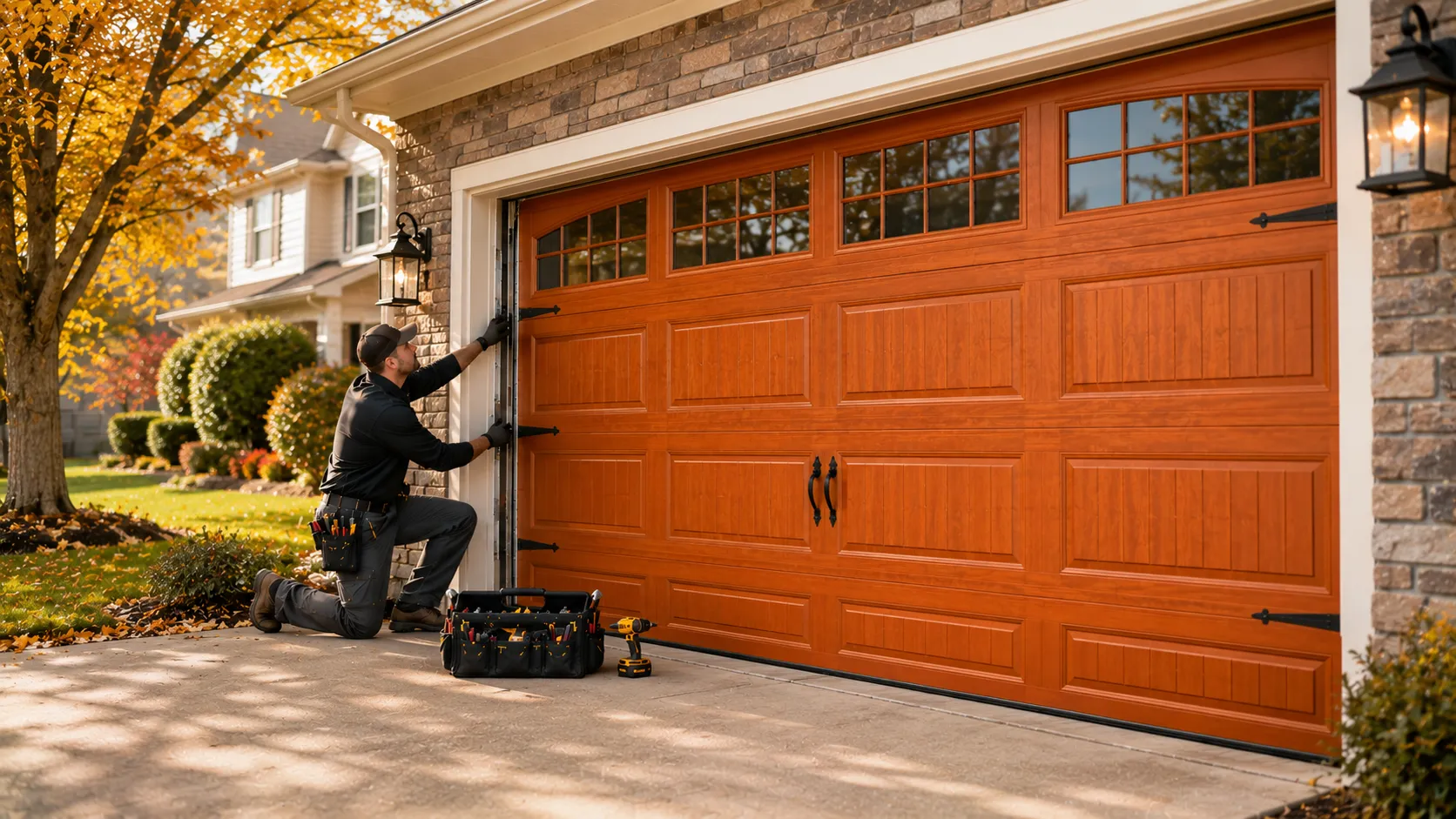
Gurnee sits in a cold moderate climate band, which sounds mild until you've watched a 16-foot door breathe with the seasons. Steel contracts in January and expands back out by August, and every cycle works the screws in the track brackets a little looser. That's not a one-time storm problem. It's a slow one, and it shows up as a door that used to run quiet now clunking at the top of the track or drifting an inch off center when it's most of the way up.
The part people miss is that a wide door has more surface for the wind to push against than a single-car door, and it has less structure holding that surface flat. A 9-foot door can shrug off a gust that will bow a 16-foot slab if the horizontal strut isn't doing its job. In a climate that swings between hard freezes and hot, humid summers, the hardware holding that strut in place is under load twice a year just from temperature, before wind ever gets involved.
We don't get called out for wind damage as often as we get called out for the buildup that leads to it - loose track bolts, a bowed panel nobody noticed, a bottom bracket that's been walking sideways for two winters. By the time wind actually bends something, the door was already asking for the fix.
The area
What Is Going On
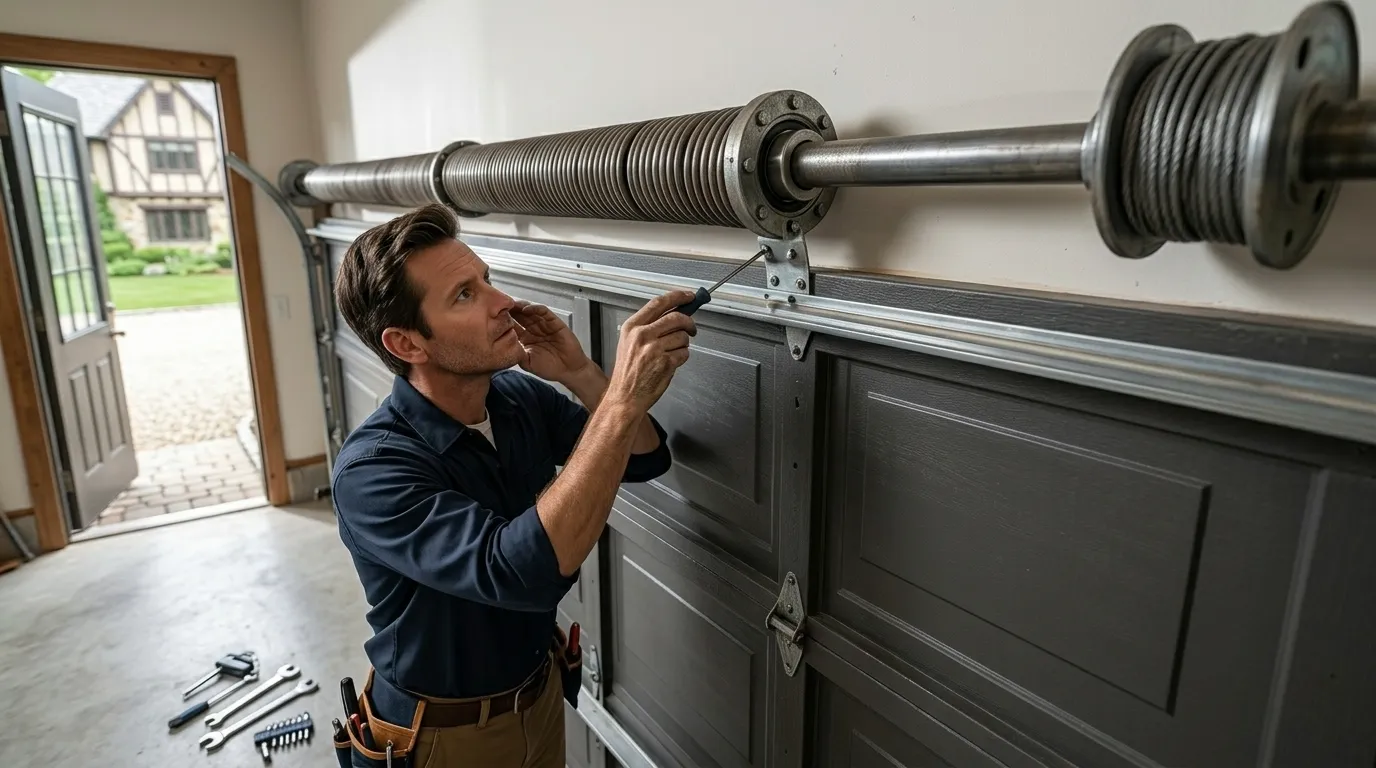
A garage door isn't a wall. It's a hinged panel assembly held in a track by rollers and a handful of brackets, and wide doors - the double-car, single-piece kind - rely on a horizontal strut bolted across the back to keep the whole thing from bowing when air pushes on it from outside. Wind doesn't need to be dramatic to matter here. Steady pressure against 16 feet of unsupported steel will flex the panel inward, and if the strut bolts have already loosened from a couple of seasons of freeze-thaw cycling, that flex has somewhere to go - usually into a bowed panel, a roller popped out of the track, or a bent top section that no longer seals against the header.
Single-car doors, common on the older lots in town, don't have this problem nearly as often. Less unsupported width means less flex, full stop. The double door is the one that needs the strut kit checked, and it's the one we get called about after a windy stretch - not because the wind was unusual, but because nobody had looked at the hardware in years.
What we find
What Local Conditions Do
Housing across Gurnee and the surrounding named areas went up mostly between 1946 and 2009, with the bulk of it dating to the 1980s and 90s. That matters here because doors from that build era are original steel, often 25- or 27-gauge, installed with the hardware standards of their time - which did not always include a horizontal strut sized for a wide opening. A lot of these doors were never built to resist bowing the way a modern wind-rated panel is; they were built to open and close.
So when we're out at a house in one of the 53 named subdivisions in the service area, the door we're often looking at is 20 to 40 years old, on a double-wide opening, with track hardware that's never been retrofitted. That combination - old steel, wide span, original brackets - is exactly what gives wind something to work with. Add a Midwest winter's contraction cycle and the bolts are already a step behind before spring gusts show up. Newer builds in town, especially anything post-2000 with factory strut reinforcement, hold up noticeably better under the same conditions.
How we work
What It Costs
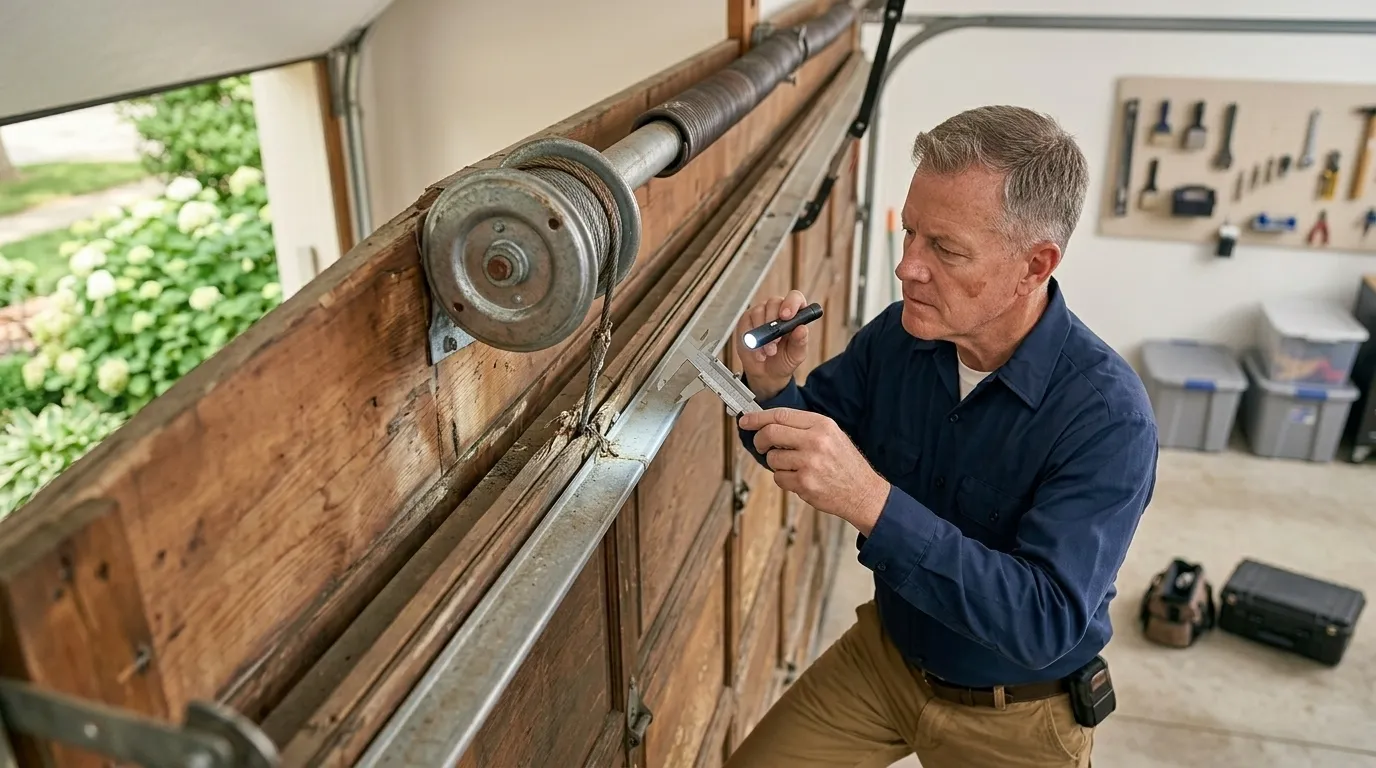
We don't have a flat number to quote you here, because what a wind-related fix costs depends entirely on how far it's gotten - a strut retrofit and bracket tightening is a different job than replacing a bowed panel or a whole double door. What we can tell you is what drives the number: whether it's one panel or the full slab, whether the track needs realigning along with it, and whether the opener needs a force adjustment after the door's weight or balance changes.
With a median household income of $113,697 across the area, most owners we talk to would rather catch this at the strut-kit stage than wait for a bowed panel to need full replacement, and that's the honest advice: if you can hear the door working harder than it used to, get the hardware looked at before a windy week decides for you. One limitation worth saying plainly - if the panel is already bent, a strut kit won't undo that. At that point you're replacing the section, not reinforcing it, and we'll tell you that straight rather than sell you a patch that won't hold.
Questions
Common questions
Is my double-wide door at more risk from wind than a single door?
Yes. A 16-foot single-piece door has far more unsupported surface than a 9-foot door, and it relies on a horizontal strut to keep that width from bowing under wind pressure. If your house is one of the many built here in the 1980s or 90s, check that the strut and track bolts haven't loosened over the years - that's usually the real weak point, not the door itself.
Does Gurnee's winter actually affect garage door hardware?
Yes, in a slow way. The area sits in a cold moderate climate band, and steel track hardware contracts and expands with each seasonal swing. Over years, that cycling loosens bolts at the brackets and strut. It's rarely dramatic on its own, but it sets up a door to be more vulnerable when wind does push on it.
Should I replace an old wide door instead of reinforcing it?
Depends on the panel. If the steel is already bowed or a section is bent, a strut kit won't fix that - you're into panel or full door replacement at that point. If the door is still flat and the problem is just loose or missing strut hardware, reinforcing it is the cheaper and correct call.
Ready when you are
Need a garage door sorted in Gurnee?
Gurnee Garage Door Pros repairs and installs garage doors, springs and openers in Gurnee, IL and the surrounding area.