
Torsion Spring Systems
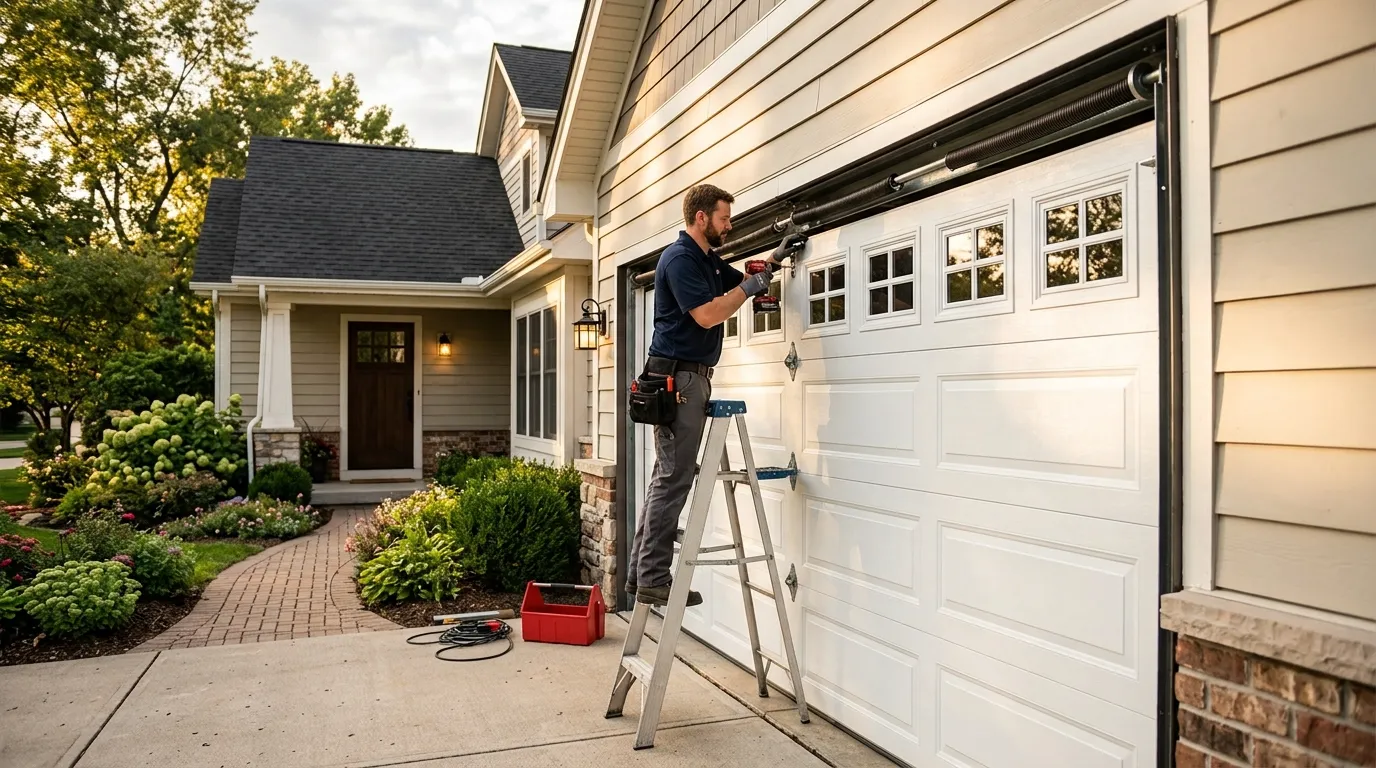
Overhead torsion systems are common across much of the 1980s- and 90s-era housing stock, so most spring work follows a familiar pattern once the door is measured.
Local garage door service · Gurnee, IL
Garage door repair and installation for Gurnee homes built mostly between 1946 and 2009, covering cable repair, commercial garage doors, emergency service, maintenance, spring repair, and the mixed-generation systems common across the area's 1980s- and 90s-heavy housing stock.
Garage door services
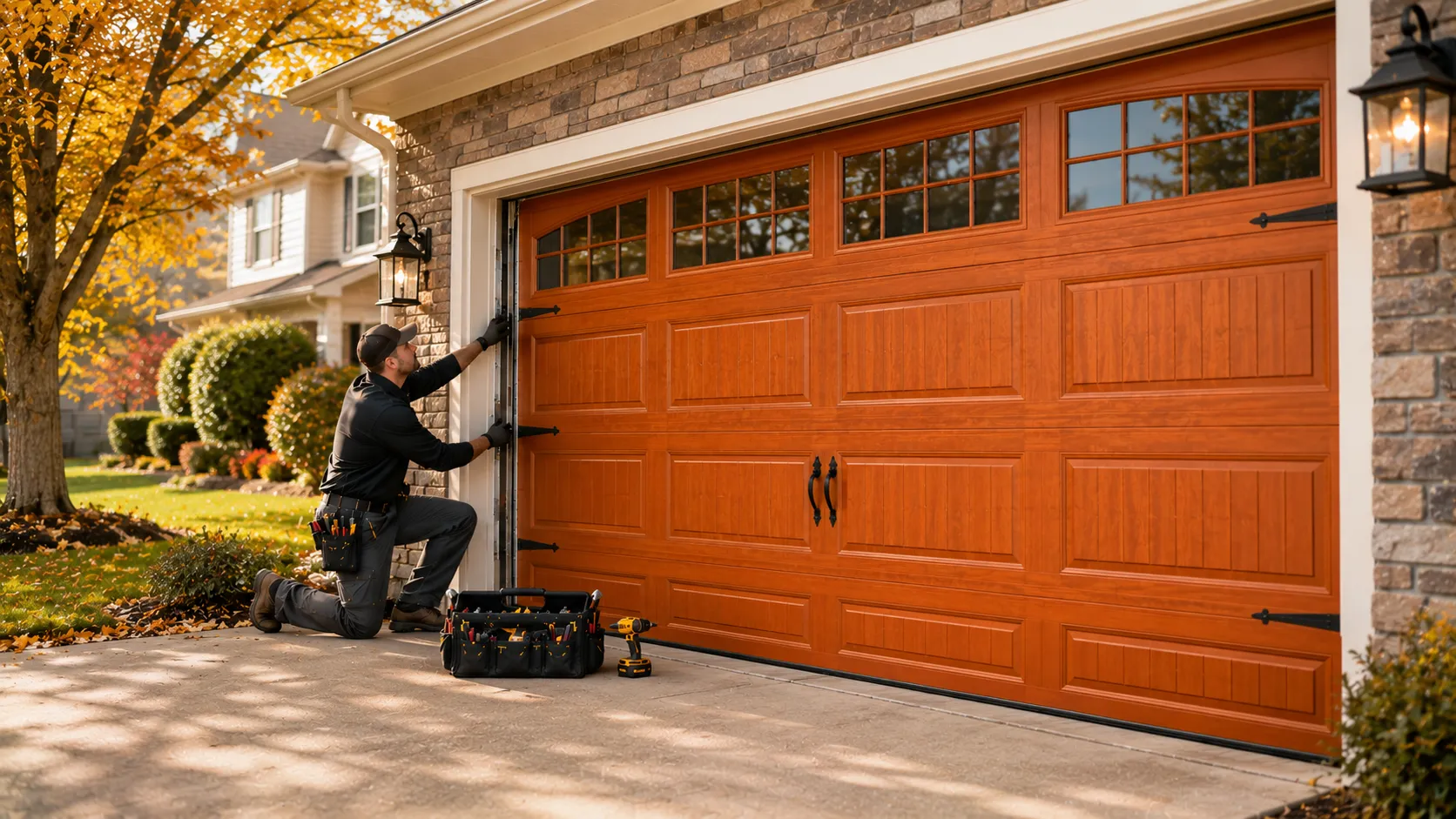
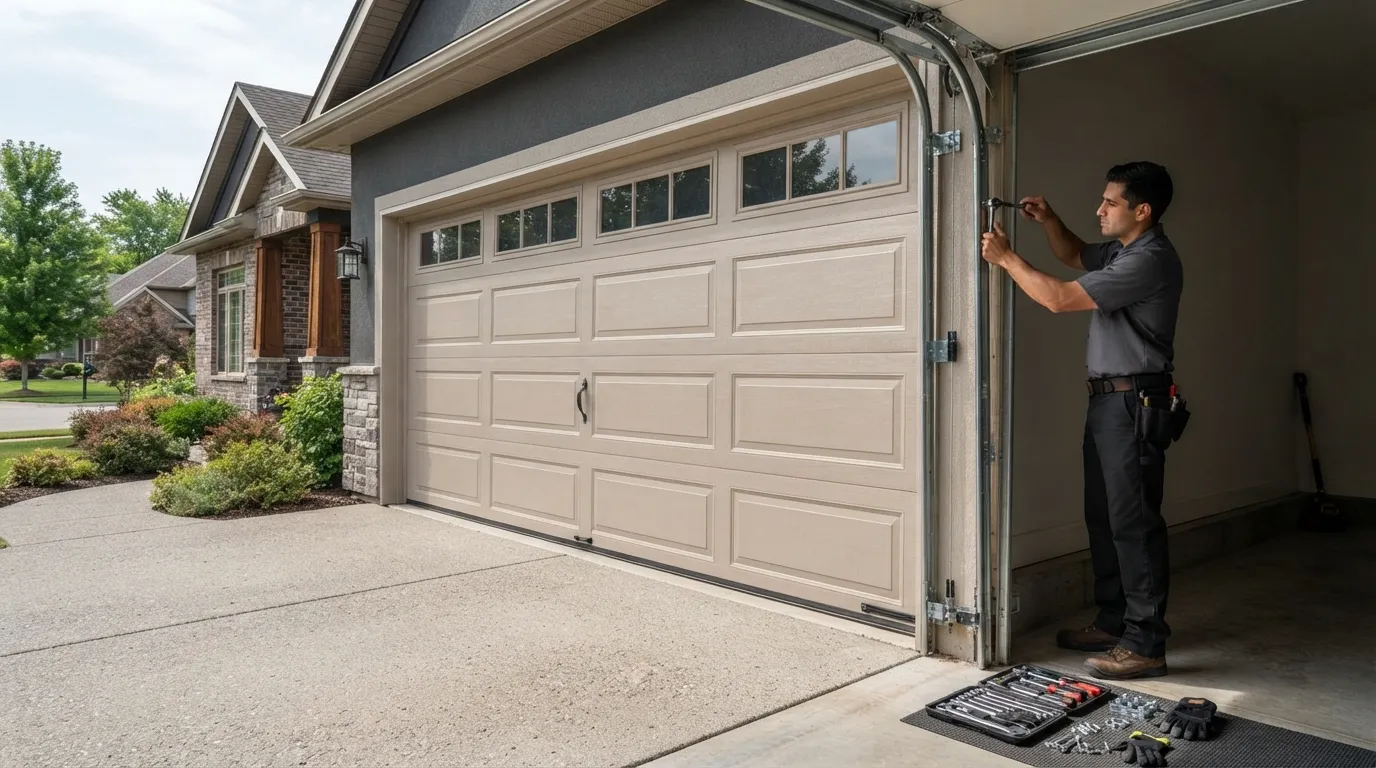
From cable repair and commercial garage doors to emergency service, installation, maintenance, spring repair, and general garage door work, the lineup is built around the systems common across Gurnee's mixed-age housing stock.
What to expect
We start with what the door is actually doing, use the symptoms to point toward the likely cause, inspect the door in the garage where it's installed, and explain repair versus replacement before any work proceeds.
Tell us whether the door won't move, a spring snapped, a cable looks wrong, the opener is failing, or the door is binding in the tracks. That symptom is the starting point.
The symptoms can help point toward a spring, cable, opener board, roller, track, or other operating problem before the on-site inspection.
We look at the door in the garage where it is installed and evaluate the whole system before recommending work.
If the door remains structurally sound, the repair stays targeted. If panels or other major components are beyond a safe repair, replacement can be discussed instead.
Some Older Doors Are Past a Practical Repair
Badly cracked, rusted, or structurally deteriorated doors may be better candidates for replacement than another isolated repair.
Local housing matters
The broader source service area spans homes built between 1946 and 2009, with a median build year around 1986 and much of the housing concentrated in the 1980s and 90s.
That creates a large number of garages with overhead torsion systems, steel sectional doors, electronic openers, rollers, cables, tracks, and replacement hardware from several generations.
The source describes a broader footprint of 53 named areas across this part of Lake County.
A smaller share of homes reaches back into the 1946–1960 period, where older extension-spring systems and earlier door configurations can still appear.
The build year provides useful context, but the correct repair depends on the hardware actually installed today.
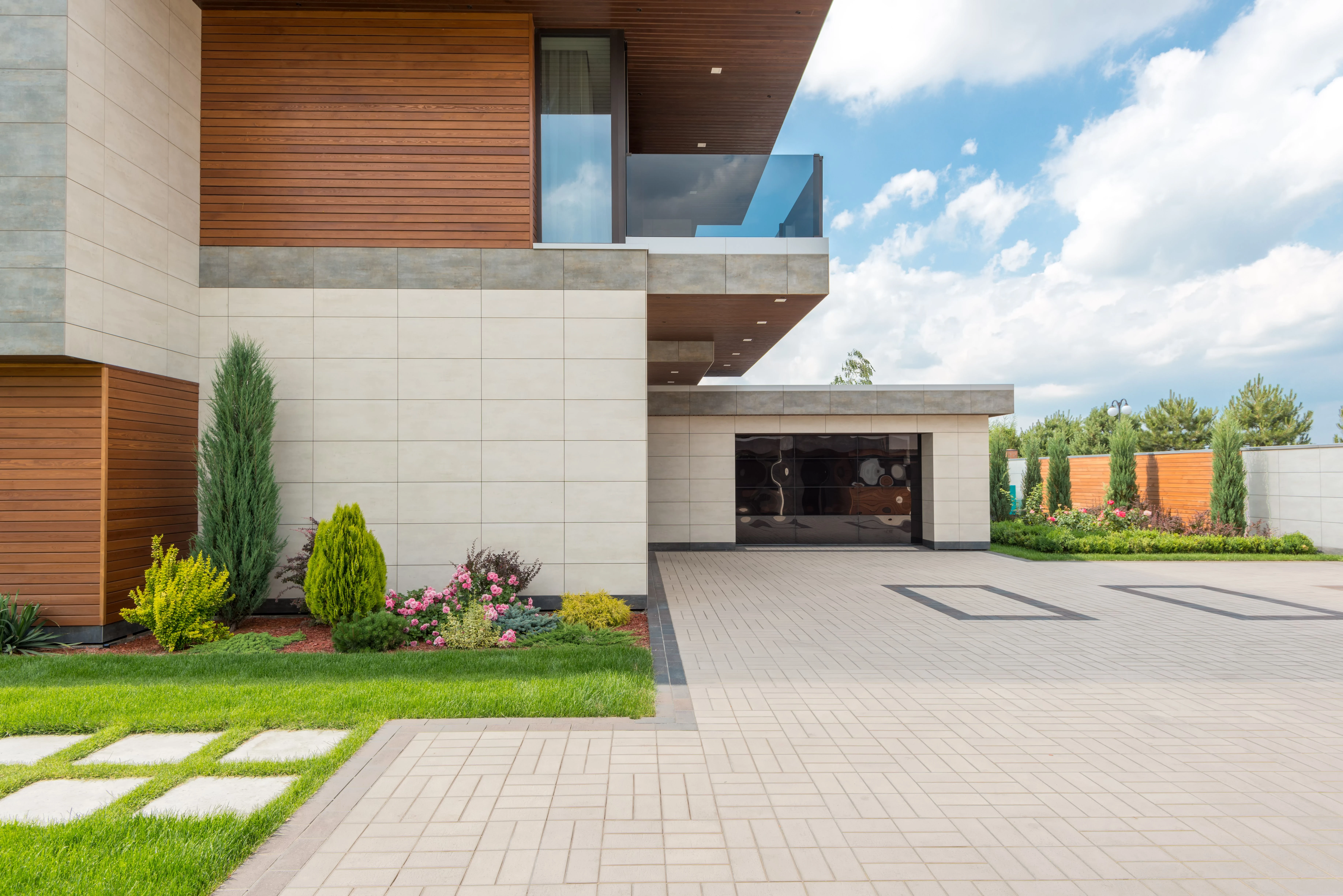
1980s–90s garage door systems
Homes concentrated around the 1980s and 90s can combine torsion systems, steel sectional doors, aging electronic openers, replacement panels, and several generations of service work.
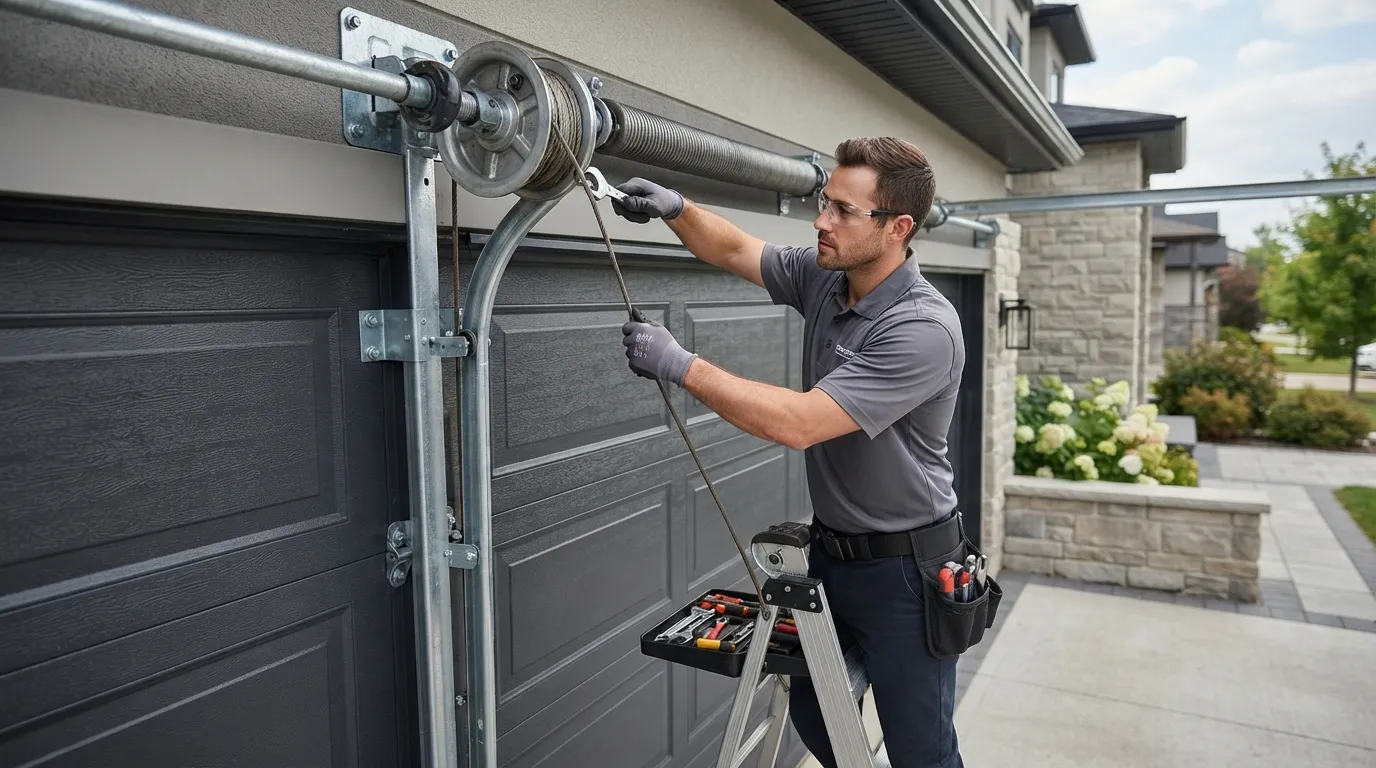
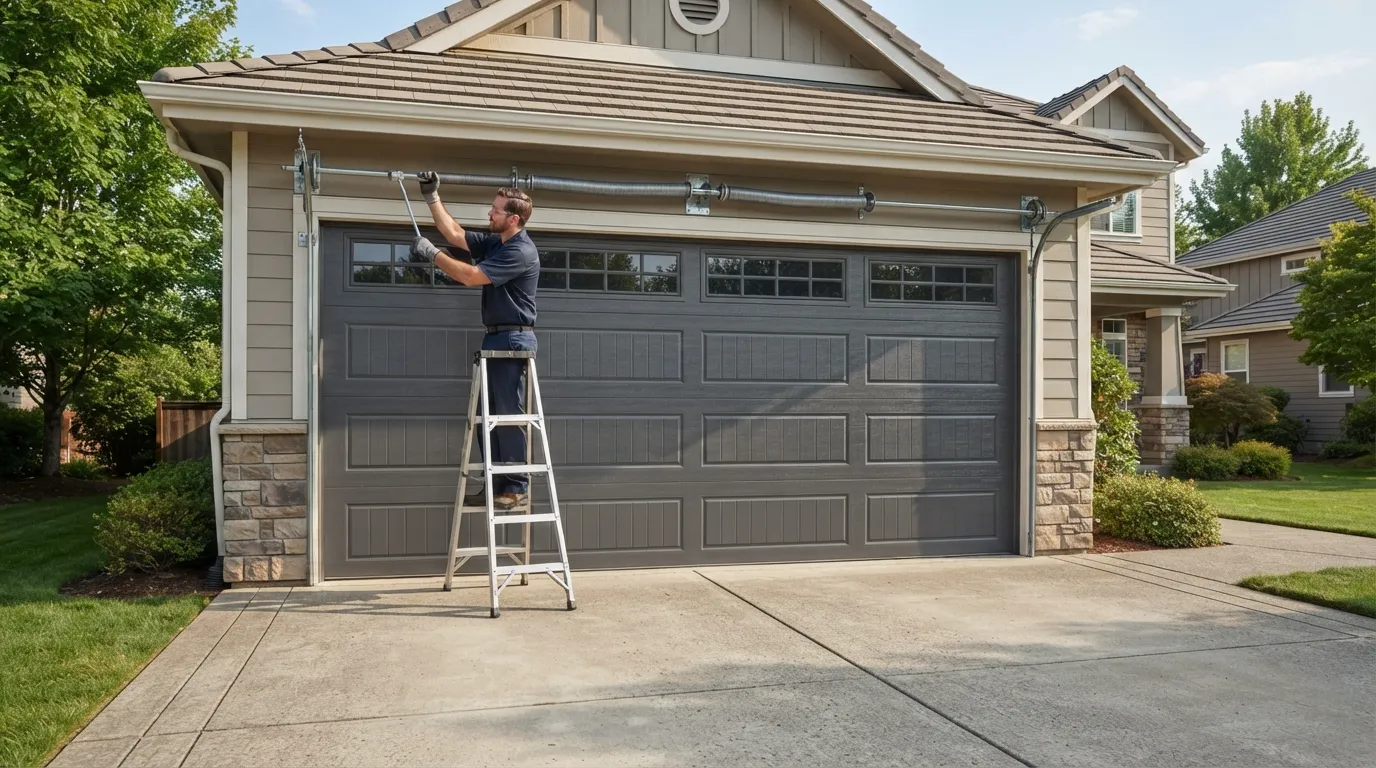
Overhead torsion systems are common across much of the 1980s- and 90s-era housing stock, so most spring work follows a familiar pattern once the door is measured.
Some earlier postwar homes can still use side-mounted extension springs rather than an overhead torsion bar.
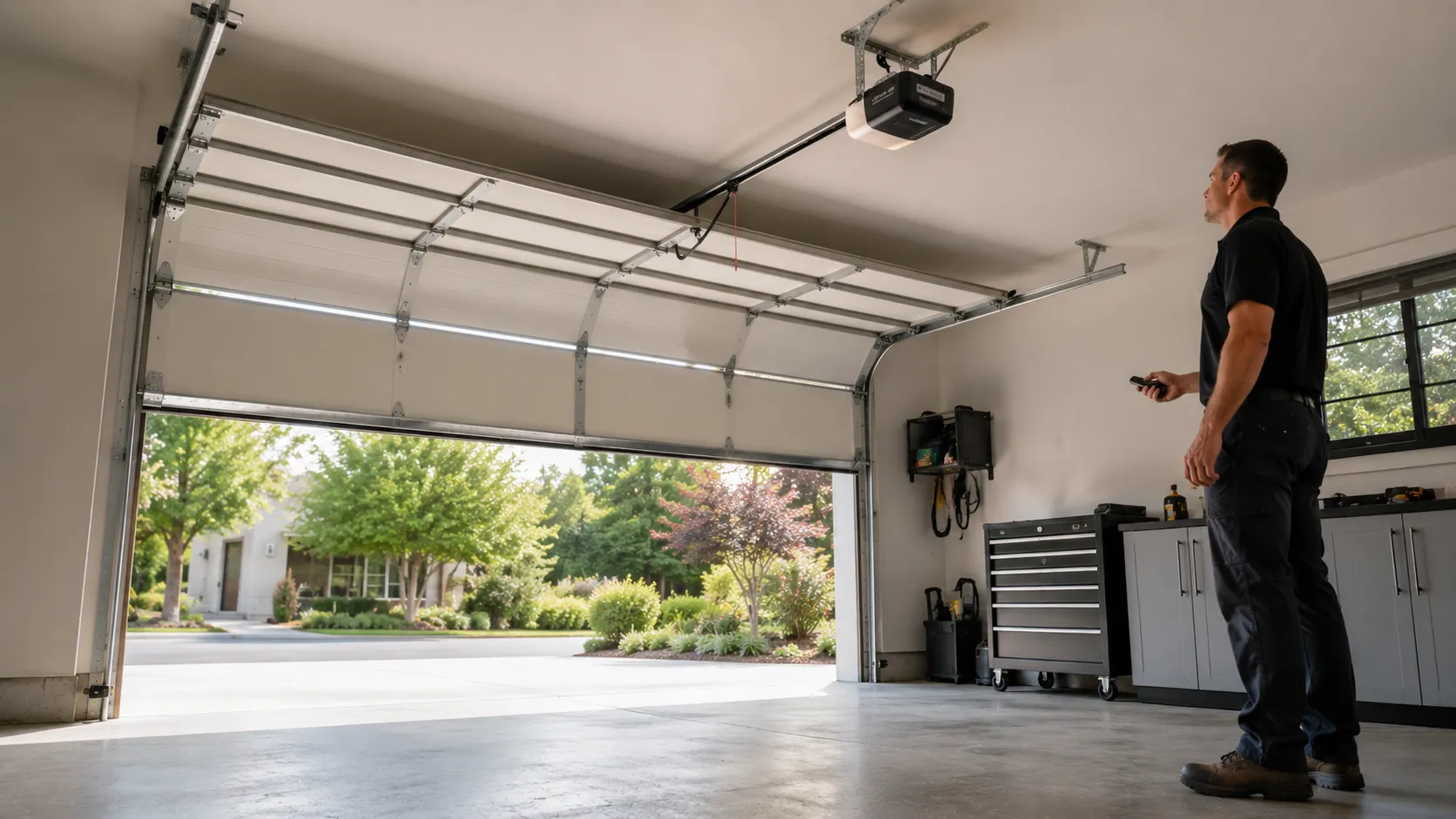
Openers from later decades can now have aging boards, drive gears, controls, sensors, and other components.
A garage may have a newer opener or panel while retaining older springs, cables, rollers, tracks, or mounting hardware.
Common Gurnee garage door problems
Broken springs, aging openers, worn rollers, cable problems, weather seal deterioration, and track alignment issues make up much of the work across Gurnee's mixed-age housing stock. Broken torsion springs are the most common repair, particularly on systems installed during the 1980s and 90s building wave; older opener boards and drive gears reach the end of their useful life while the surrounding door remains serviceable; rollers and cables wear after years of operation while weather seals crack or pull away after long seasonal exposure; and earlier homes can still use extension-spring systems that require different parts and safety considerations than later torsion setups — so the correct repair depends on inspecting the whole system rather than assuming every door uses the newer standard.
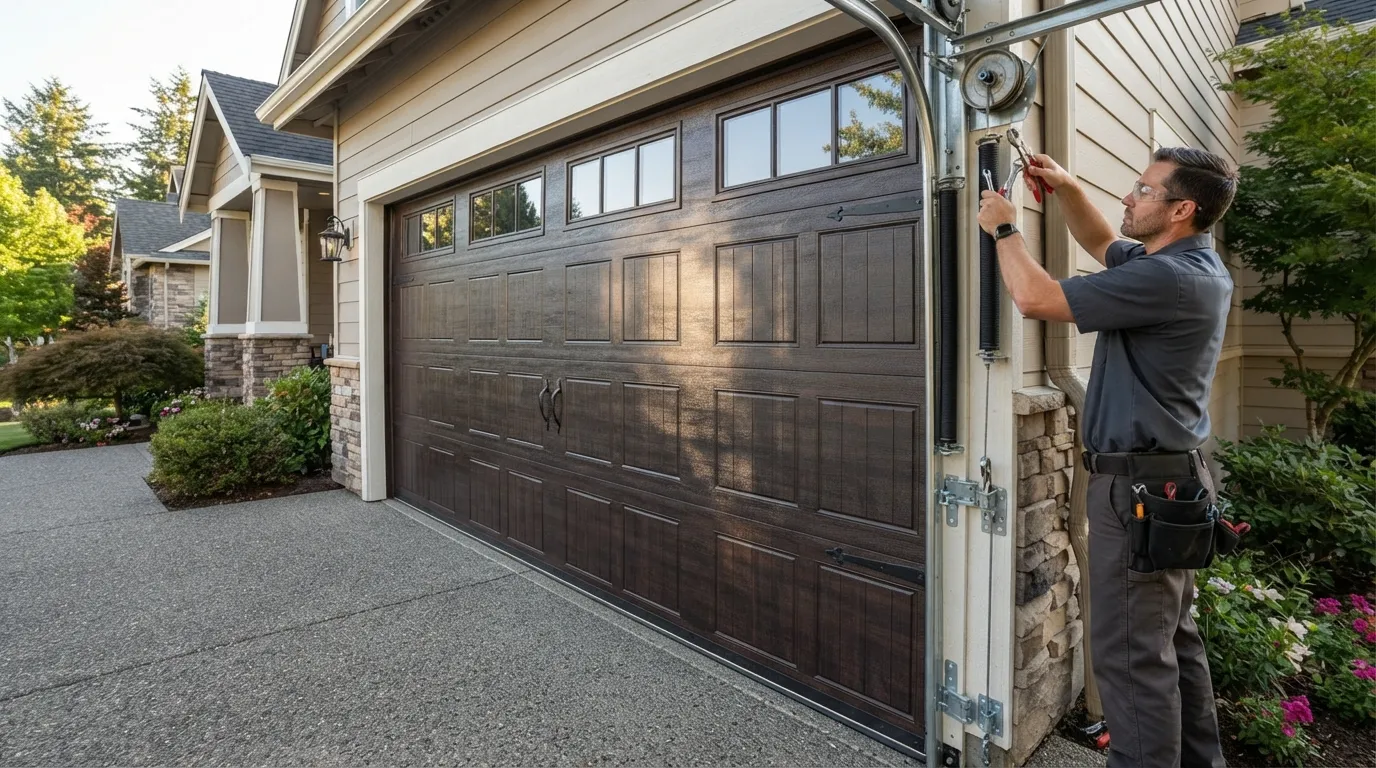
Garage door springs eventually reach the end of their useful cycle life after years of repeated opening and closing.
Older opener boards, drive gears, motors, controls, and sensors can eventually develop operating problems.
Older rollers can become noisy, rough, damaged, or resistant after years of regular track travel.
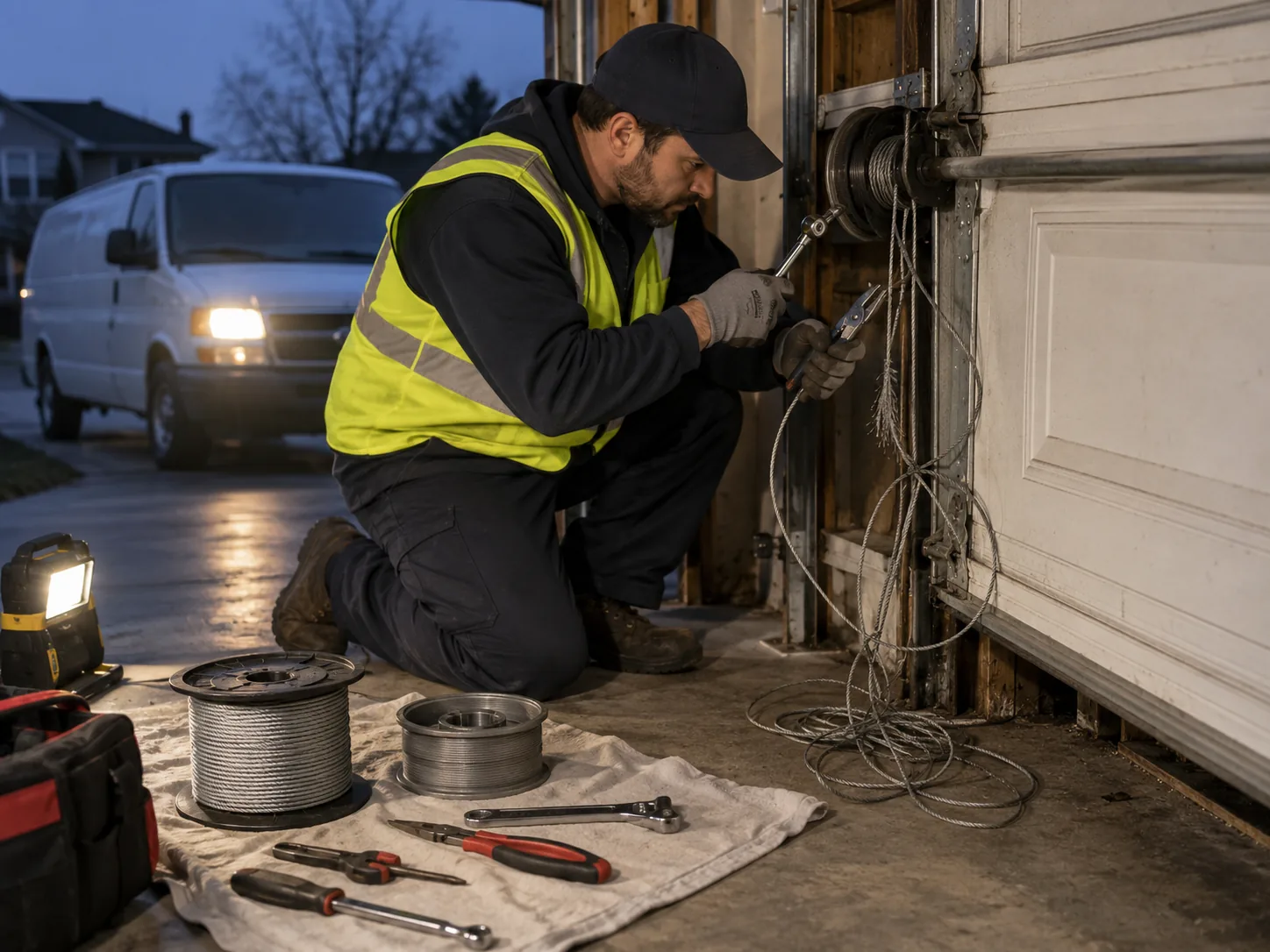
Cables can fray, loosen, slip, or fail after years of carrying repeated lifting loads.
Track alignment and weather seals can deteriorate over time and affect how smoothly and tightly an older door operates.
Cold-weather garage door wear
The area is moderate-cold, so colder seasonal operation tends to expose existing spring fatigue, roller resistance, cable wear, lubrication, seal, and alignment problems rather than temperature alone causing mechanical failure.
Cold-weather operation can expose weakness in a spring that is already approaching the end of its useful cycle life.
Worn rollers can become more noticeable when an older garage door is already moving with additional resistance.
Existing cable wear and aging weather seals can become more noticeable during colder months and repeated seasonal exposure.
An opener can work harder when springs, rollers, tracks, or balance problems are already making the door difficult to move.
Keep the system moving
With much of the local housing now decades into regular use, periodic inspection can help identify spring fatigue, cable wear, roller problems, track movement, opener strain, and weather seal deterioration before a small issue becomes a complete failure.
Changes in door balance can indicate the spring system is no longer carrying the door as effectively as it should.
Fraying, rough travel, looseness, or visible roller wear can point to developing lifting and guidance problems.
Tracks, brackets, hinges, and mounting points can be checked for movement, wear, looseness, or corrosion.
Changes in opener behavior or cracked and pulling weather seals can provide early signs that the system needs attention.
Clear repair guidance
There isn't one flat repair price, because spring work, cable repair, maintenance, commercial service, installation, and other jobs involve different parts and labor.
Door age, spring system, cable condition, roller wear, track condition, opener generation, and whether the surrounding structure remains sound can all change the scope.
We identify the actual failure before replacing parts, including matching spring dimensions to the door rather than using a generic substitute.
We recommend a targeted repair when it will hold and broader replacement only when the existing door is structurally past a safe or practical fix.
No neighborhood-based pricing or fixed price range applies — the number comes from the door in front of us.
Repair or replace?
An older garage door is not automatically a replacement candidate. Repair remains practical when the structure is sound and the failure is isolated, while replacement becomes more sensible when the door itself is cracked, rusted through, or no longer structurally reliable.
A targeted repair can make sense when the panels, tracks, opener, rollers, and surrounding structure remain serviceable.
An older door can remain worth keeping when the panels, tracks, and supporting hardware continue to operate reliably.
Replacement becomes more practical when corrosion or cracking has weakened the door beyond a safe and durable repair.
When multiple major parts are deteriorating together, broader replacement can offer better long-term value than repeated individual repairs.
Service areas
Questions
Most housing in this service area was built between 1946 and 2009, with the median landing around 1986, so a lot of doors and torsion hardware date to the 1980s or 90s. That's old enough for springs to be near the end of their rated cycle count, which is why spring failure is the most common call we get.
Yes. A portion of the housing stock here goes back to the original postwar wave, and those homes sometimes still run side-mounted extension springs instead of an overhead torsion bar. We carry knowledge of both systems and price them differently since the parts and the safety setup aren't the same.
This area sits in a moderate-cold climate band, and the swing between a sunny afternoon and an overnight freeze puts real stress on steel and rubber. We see rollers seize, cables fray, and weatherstripping crack more often in those months, and track misalignment tends to follow after a few winters of that cycle.
No. If a repair will hold, we say so and do that instead. We only recommend replacement when the door is cracked, rusted through, or otherwise past a safe fix - telling you that up front matters more to us than selling a bigger job.
We work from Park City and Gages Lake nearby out through Grayslake, Libertyville, Lindenhurst, Round Lake Beach, and as far as Antioch and Wauconda, plus the areas in between. If you're unsure whether your street falls in range, just call and ask.
Ready when you are
Tell us what the door is doing and we'll help you figure out whether you're dealing with a cable, spring, opener, track, emergency problem, maintenance issue, installation need, or an aging system that's reached the point where replacement makes more sense.