
Guide
What Actually Happens During a Service Call
A look at what happens when Gurnee Garage Door Pros comes out for a repair call, tied to the age of local housing stock and the cold climate here.
Local detail
The Seasonal Bit
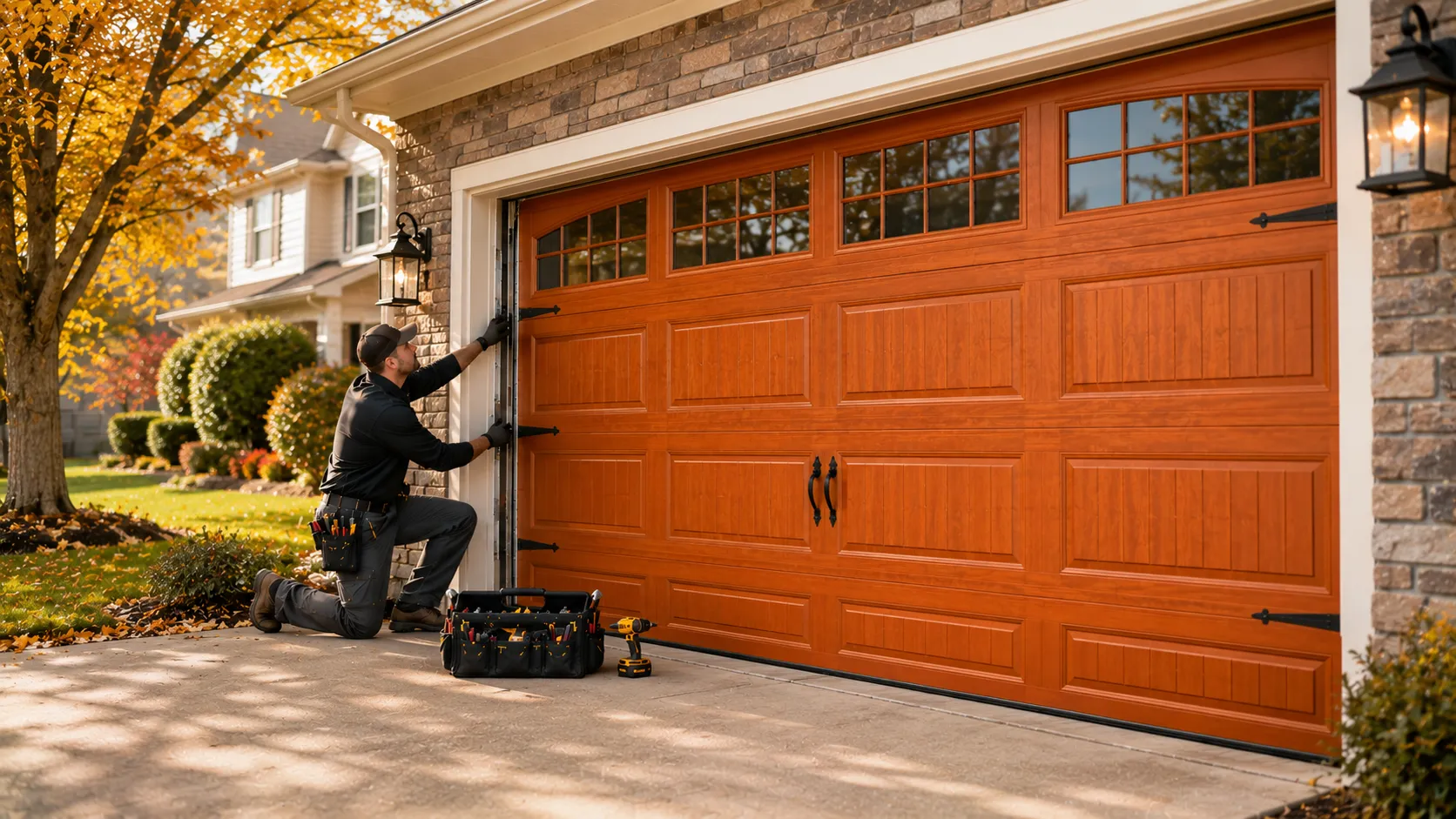
Cold does specific things to a garage door that heat doesn't, and Gurnee sits in a moderate-cold climate band, so we see the same pattern every winter: springs that lost tension over the fall snap on the first hard freeze, openers that strain because grease has stiffened up in the cold, and weatherstripping that shrinks and pulls away from the slab. None of that is exotic. It's what happens to steel and rubber when the temperature swings the way it does here through the year.
A service call in January usually starts with us asking when the door last got serviced, because a spring that was already tired going into fall is the one that breaks in the cold snap. We don't treat every call the same - a door that's been maintained gets a quick diagnosis, one that hasn't gets a longer look at everything else that might be about to go.
The area
What Is Going On
Most of the housing this company works on went up between 1946 and 2009, with the median build year landing around 1986, and the bulk of it across the area's named subdivisions is 1980s and 90s construction. That matters because a door installed when a house was built in 1986 is closing in on 40 years old, and the hardware from that era - lighter-gauge torsion springs, older extension setups, first-generation chain-drive openers - wasn't built to last that long without parts replacement. A service call on a house from that stretch is often less about one broken thing and more about several parts that are all near the end of their rated cycle at once.
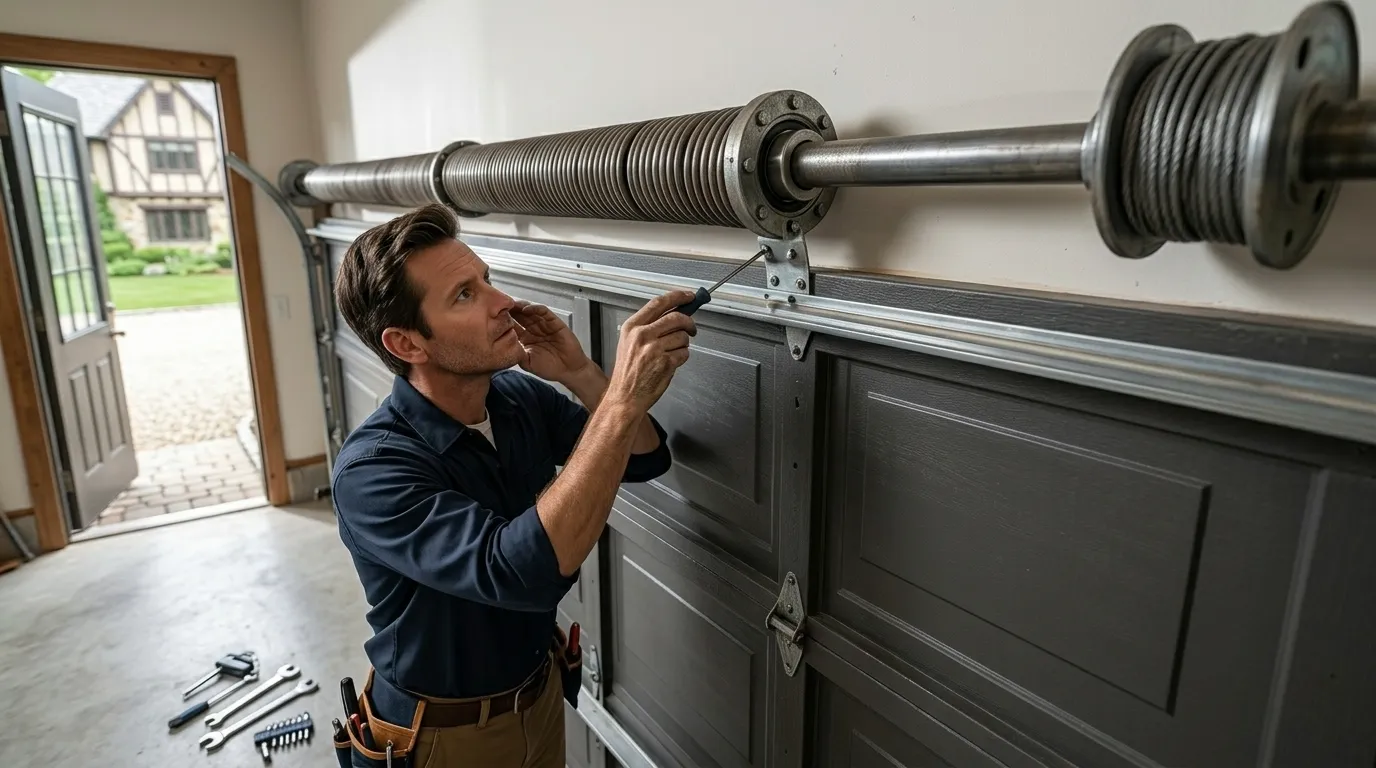
We open the panel, check the spring wind, look at the cable condition, and test the opener's force settings before we tell you what actually needs doing. Sometimes it's one part. Sometimes the honest answer is that fixing the spring today just means the opener call next spring, and we'll tell you that instead of doing the smaller job twice.
What we find
What Local Conditions Do
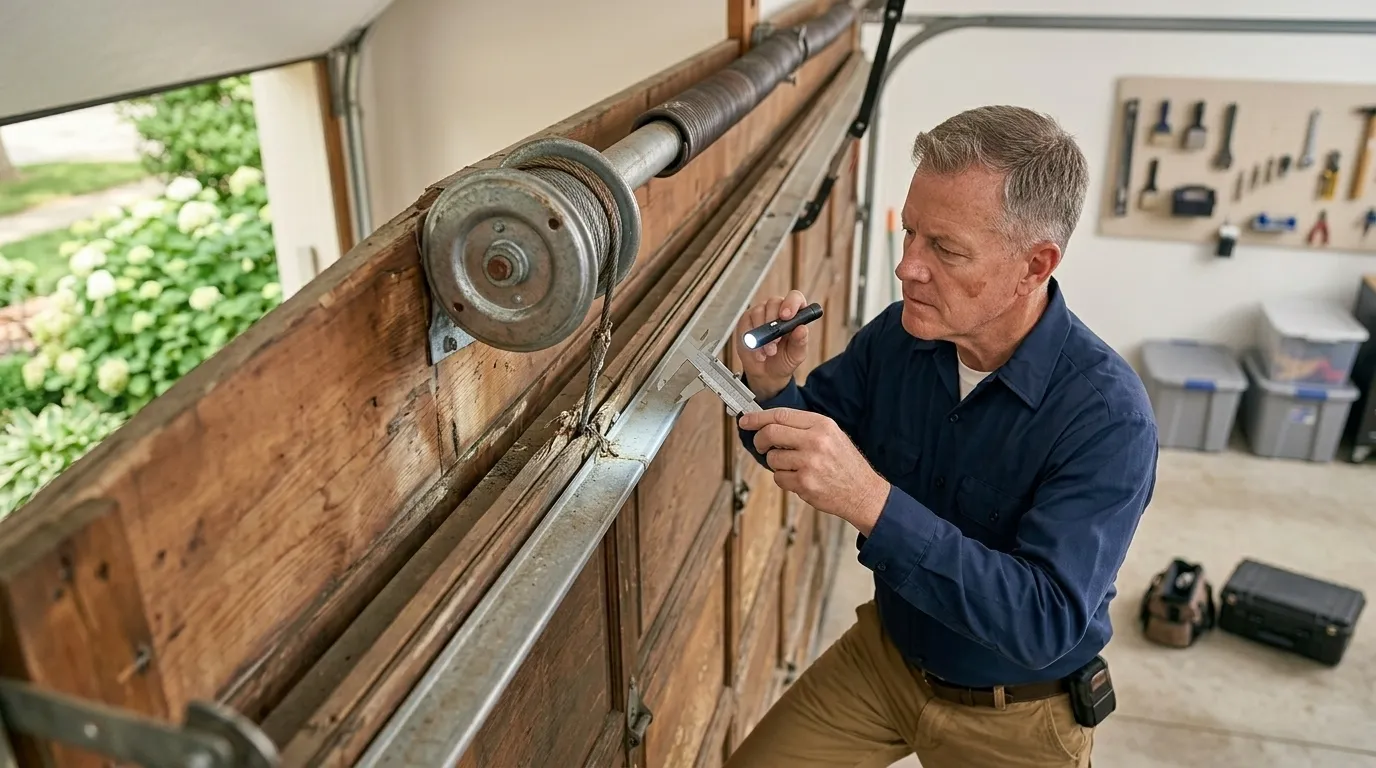
A cold-moderate climate means the ground under a slab moves a little every winter, and over decades that shifts a garage door track out of true alignment - not dramatically, but enough that rollers start binding and cables start riding wrong. On houses from the 1986 median build year, that's had close to four decades to work on the track brackets. We check alignment on every call, not just when someone reports a noise, because a track that's a quarter-inch off doesn't always announce itself until a cable jumps the drum.
The other thing the cold does is make lubricant behave differently - what's fine in July gags up in a hard freeze and makes an opener strain against resistance it shouldn't have. We use lubricant rated for the swing we actually get here, not a one-size product. One honest limit: if a track is bent rather than just out of alignment, we don't hammer it back into shape on site - a bent track gets replaced, because a patched one fails again within the year.
How we work
What It Costs
We're not going to put a number here that doesn't hold up once we're standing at your door, because the honest cost of a call depends on what we find - whether it's a spring swap, a cable, an opener board, or a track section, and whether the rest of the door is original 1980s-90s hardware or something newer. What we can tell you is how we scope it: we diagnose first, price the actual parts and labor for what's broken, and don't start work you haven't approved.
Given the median household income across this service area sits well above the state average, a lot of the calls we run end up being replacement conversations rather than repeated patch jobs - when a door's spring, cables, and opener are all near end of life together, patching one part is often money that doesn't carry forward. We'll say that plainly on site if it applies to your door, and we won't recommend replacement if a repair genuinely covers it.
Questions
Common questions
Why did my spring break in the middle of winter with no warning?
Torsion springs are rated for a number of open-close cycles, and cold makes steel more brittle right at the point it's already near that limit. If your house is from the common 1980s-90s stretch in this area, the spring may be original and simply timed out. It's rarely sudden - it's the last cycle of a long wind-down.
Do you work on doors in Park City or Grayslake too?
Yes, we cover the surrounding service area, including Park City, Gages Lake, Grandwood Park, Grayslake, Lindenhurst, and the other towns within a roughly ten-to-thirteen mile radius of Gurnee.
Is it normal for an opener to strain in cold weather?
Some strain is normal - grease thickens and lift resistance goes up slightly. Persistent grinding or a motor that hums without moving the door means something else is wrong, often a spring that's no longer carrying its share of the weight, and that's worth a call before the opener burns out trying to compensate.
How do I know if my track needs alignment or replacement?
If the door runs but rattles or rollers catch in one spot, that's usually alignment. If the track is visibly bent or dented, alignment won't hold - it needs a new section. We check this on every service call regardless of what the original complaint was.
Ready when you are
Need a garage door sorted in Gurnee?
Gurnee Garage Door Pros repairs and installs garage doors, springs and openers in Gurnee, IL and the surrounding area.