
Guide
What We Check First on a Gurnee Service Call
Why a Gurnee tech starts with the spring and track on 1980s-90s builds, and what the cold does to hardware from that era before anything else gets touched.
Local detail
The Seasonal Bit
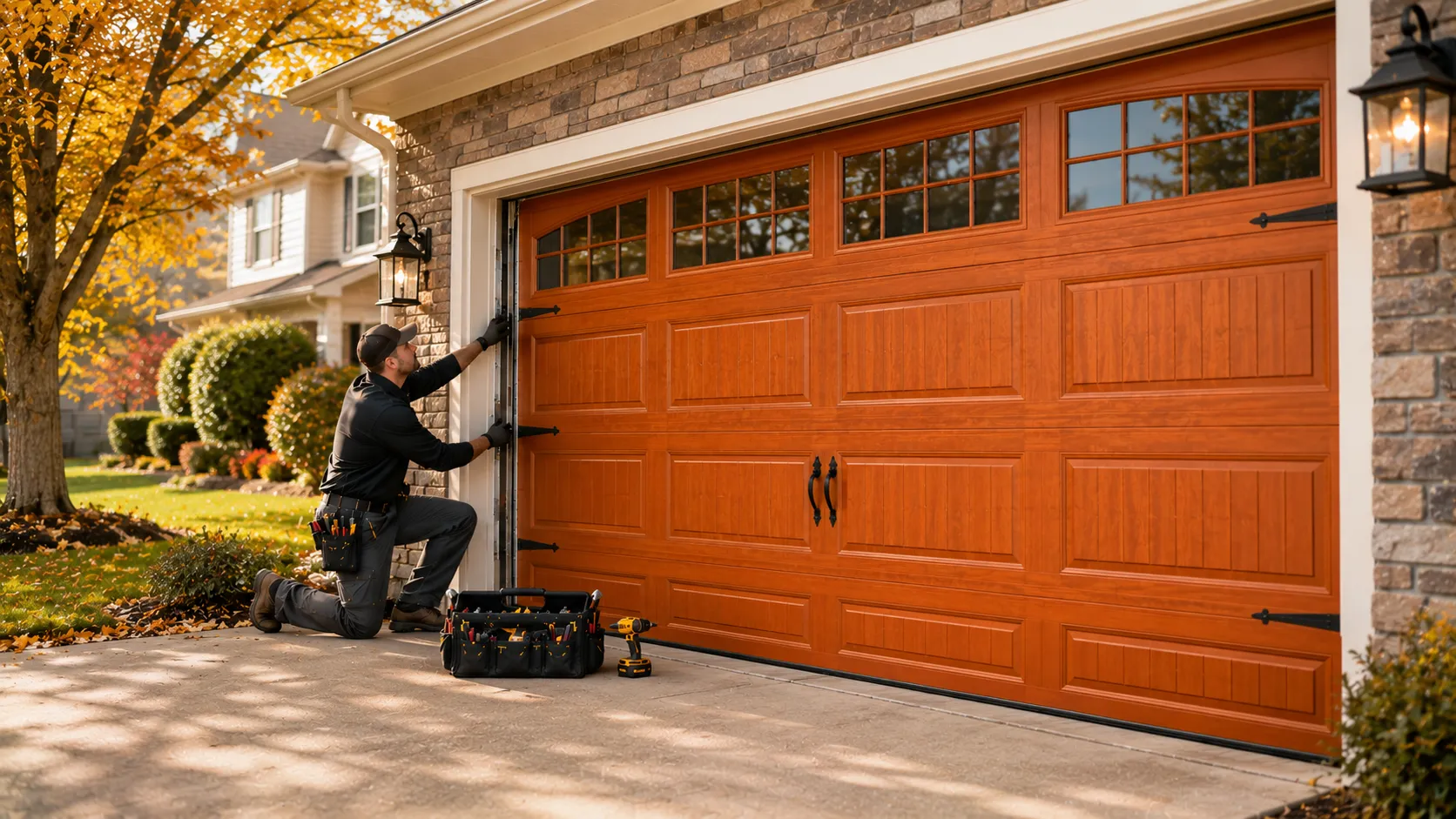
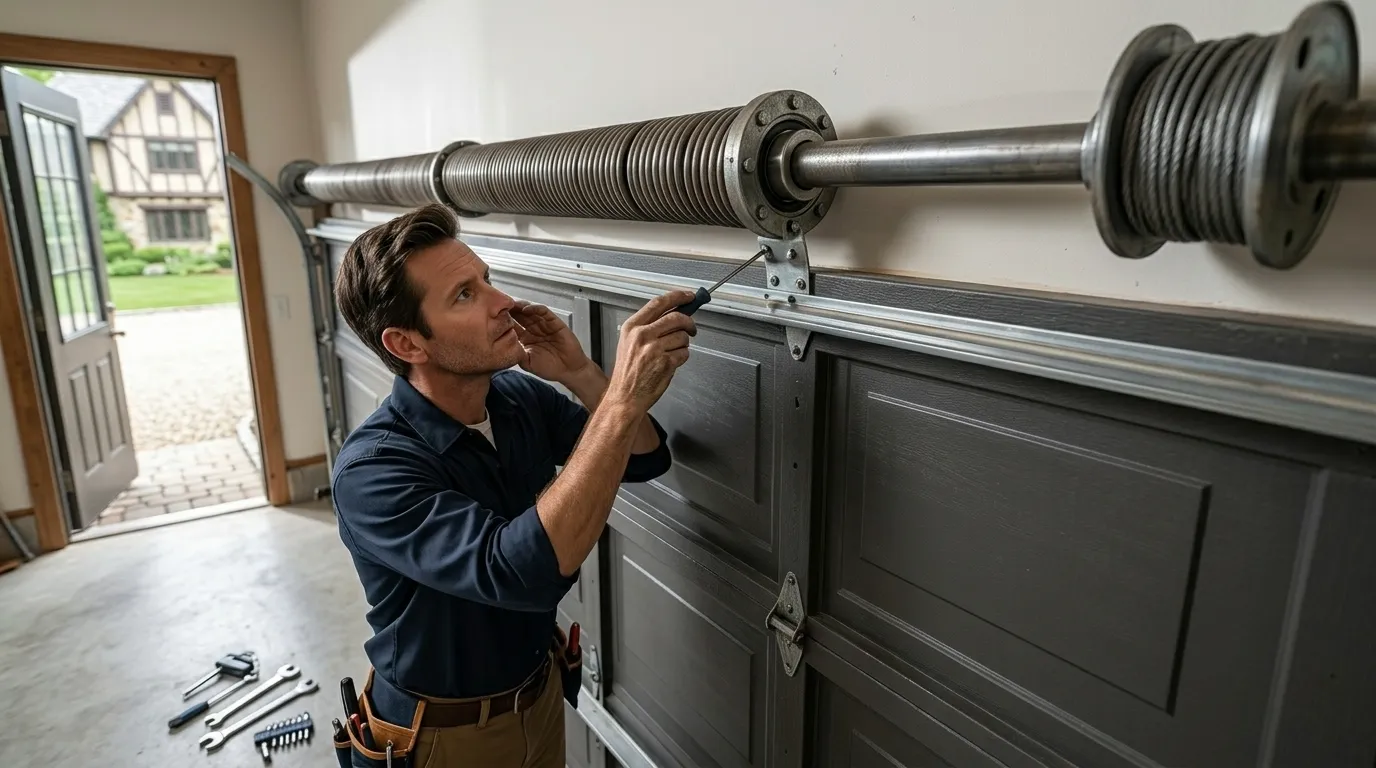
Cold is the first thing that shows up on the truck sheet here. Gurnee sits in a moderate-cold band, and that means steel contracts every winter and expands every summer, year after year, on the same torsion springs and tracks. A spring wound to spec in July is carrying different tension in January. We don't guess at that - we check the coil gap and the cable drum before we touch anything else, because a spring that looks fine in August can be a half-turn off by December. If your door has gotten louder or heavier to lift since the temperature dropped, that's the first place we look, not the opener.
This isn't a once-a-year concern. In a climate that swings hard between seasons, the door hardware is always adjusting to something. We don't push a maintenance plan nobody asked for, but we do flag it when a spring is close to the edge of its cycle life, because a cold snap is exactly when a marginal spring lets go.

The area
What Is Going On
Most of the housing stock we work on went up between 1946 and 2009, with the bulk of it - across the named subdivisions in this area - built in the 1980s and 90s. That's a specific window for garage doors: it's late enough that most homes have a lift-style overhead door on torsion or extension springs rather than the older one-piece swing-up style, but early enough that a lot of original hardware is now 30-plus years old and past any reasonable service life.
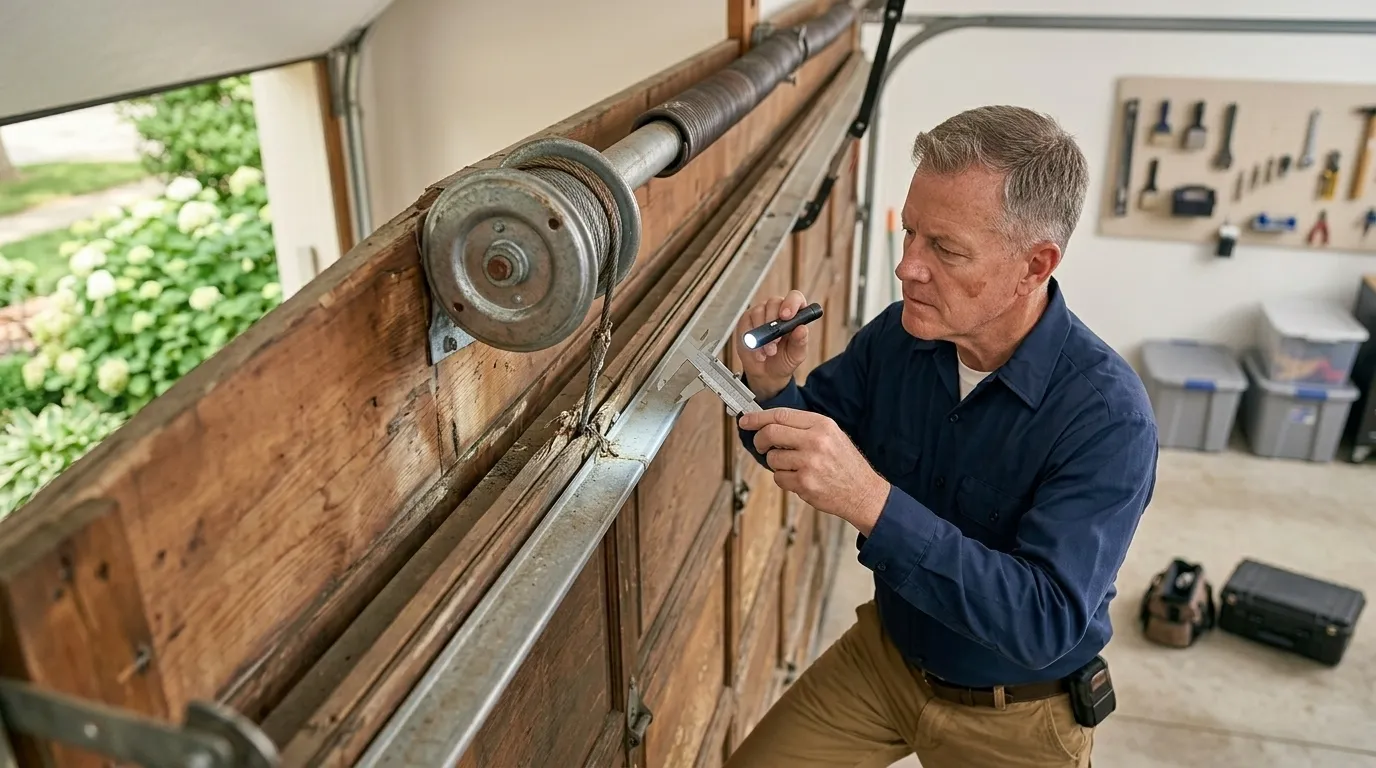
What that means on a call: we're rarely dealing with exotic or obsolete parts, but we are dealing with springs, rollers, and cable that have outlasted their rating by a decade or more. The opener is often a second or third replacement already, while the track and spring anchor points are still original to the house. First thing we check is whether the door itself - the panels, the track alignment - is original 1980s-90s stock, because that tells us whether we're fixing a part or looking at a door that's simply reached the end of its run.
What we find
What Local Conditions Do
A cold-climate garage door does different work than one in a mild region. Every time the temperature drops, the torsion spring's tension shifts slightly, the steel track can pull a hair out of true, and lubricant that was fine in summer stiffens up and stops doing its job. On a door installed in the 80s or 90s, that's been happening for thirty-plus winters straight.
We check for track separation at the mounting brackets first, because repeated cold-cycle contraction is what pulls lag screws loose over time, not a single dramatic event. We also check roller wear - steel rollers from that era don't flex the way nylon does, so they transmit more shock into the track every time the door moves through a cold morning. None of this is dramatic on its own. It's cumulative, and it's exactly what you'd expect from hardware that's spent three decades in a climate that never stops working it.
How we work
What It Costs
We don't have a set price to quote here without seeing the door, and we're not going to invent one. What we can tell you is what drives cost on a typical call in this area: whether the spring is torsion or extension, whether the track needs realignment or full replacement, and whether the door itself - given how much of the stock here dates to the 1980s and 90s - is worth repairing at all versus replacing outright.
Household income in this area runs well above the state median, and we see that reflected in what people choose: more owners here opt for a full door replacement once the springs, rollers, and opener are all near end-of-life together, rather than patching one part at a time. That's a call we help you make on site, not one we make for you over the phone.
Questions
Common questions
Why does my garage door get harder to open in the winter?
Cold makes the torsion spring's steel contract, which changes the tension it's carrying, and it also stiffens the lubricant on rollers and track. On a door with original 1980s or 90s hardware, that combination is often what pushes a marginal spring into failure right when the weather turns.
Is my garage door original to my house?
If your house was built between 1946 and 2009 like most of the stock in this area, it's possible, especially in the 1980s-90s subdivisions. A tech can tell from the spring type and track style whether it's original or a later replacement in a few minutes on site.
Do you check the opener or the door hardware first?
Hardware first. Springs, cables, and track carry the actual weight and cold-cycle stress; the opener just moves what the hardware already balances. Most calls that start as 'opener problems' turn out to be a spring or track issue instead.
Ready when you are
Need a garage door sorted in Gurnee?
Gurnee Garage Door Pros repairs and installs garage doors, springs and openers in Gurnee, IL and the surrounding area.