
Guide
What Gurnee's Housing Stock Means for Your Garage Door
Gurnee homes mostly date to the 1980s and 90s, built to lighter insulation codes. Here's how that stock and Illinois cold winters affect your garage door, and what actually needs fixing.
Local detail
The Seasonal Bit
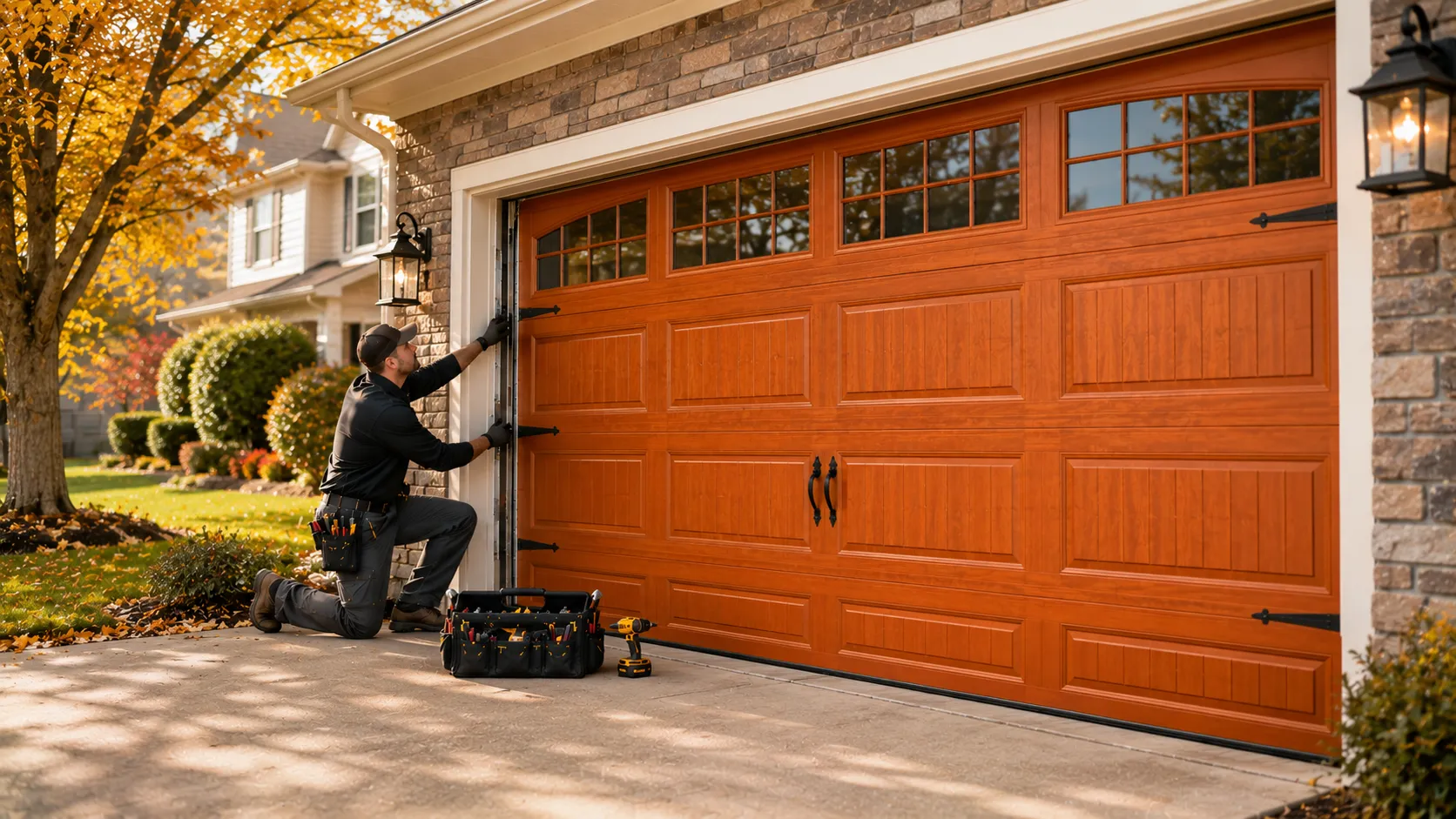
Illinois winters put a specific kind of strain on a garage door that doesn't show up in July. Steel panels contract, torsion springs lose a measurable amount of their lifting force as the temperature drops, and nylon rollers stiffen and start chattering in the track. None of this is exotic - it's just what cold does to steel and rubber, and Gurnee sits in a climate band that runs cold and moderate through the year rather than mild.
The doors that struggle most are the ones already carrying some other problem: a spring sized right for August, a track that was never quite plumb, weatherstripping that hardened last winter and never got replaced. Cold doesn't create these problems. It finds them.
If your door has felt heavier or slower to open the past few mornings, that's not your imagination - it's the spring losing tension as the shop air temperature drops, and it's the single most common reason for a winter service call in this area. A door that opens fine in September and struggles in January almost always has a spring near the end of its life, not a broken opener.

The area
What Is Going On
Most of Gurnee's housing was built between 1946 and 2009, with the bulk of it - the median falls around 1986 - going up during the 1980s and 90s building boom that shaped the 53 named subdivisions and areas across this part of Lake County. That matters for garage doors more than people expect. A door installed on a house built in the mid-80s is a door built to the standards and materials of that decade: thinner steel skins, less foam-fill or none at all, and hardware sized for what was code then, not now.
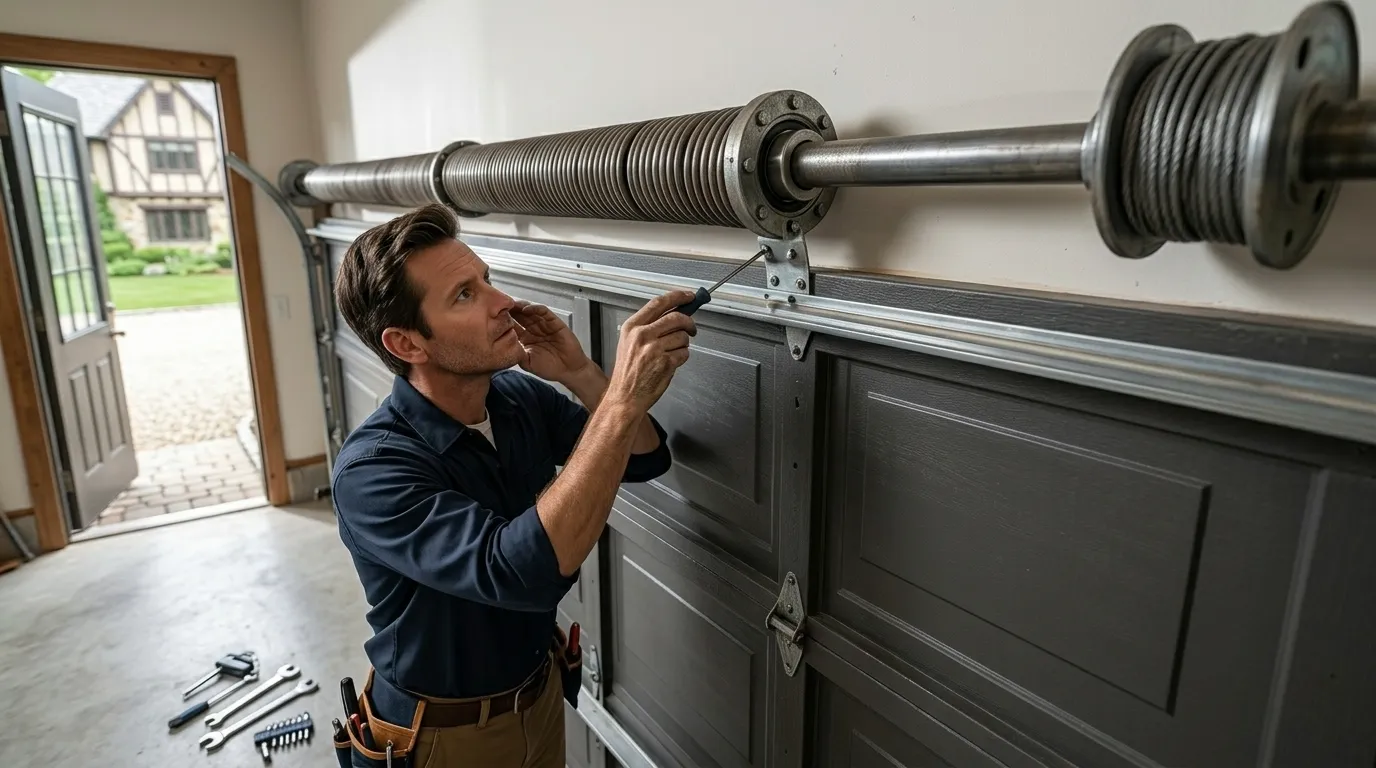
A lot of these original doors are still on the house, just aging out - springs that have cycled tens of thousands of times, tracks bent slightly from years of use, openers that predate today's safety sensors. The stock isn't uniform, but the pattern across Gurnee and the neighboring areas out to Grayslake, Libertyville, and Round Lake Beach is consistent: overwhelmingly 1980s and 90s construction, with a mix of original and once-replaced doors depending on the owner. Knowing which decade your door belongs to tells you more about what's likely wrong with it than the symptom does.
What we find
What Local Conditions Do
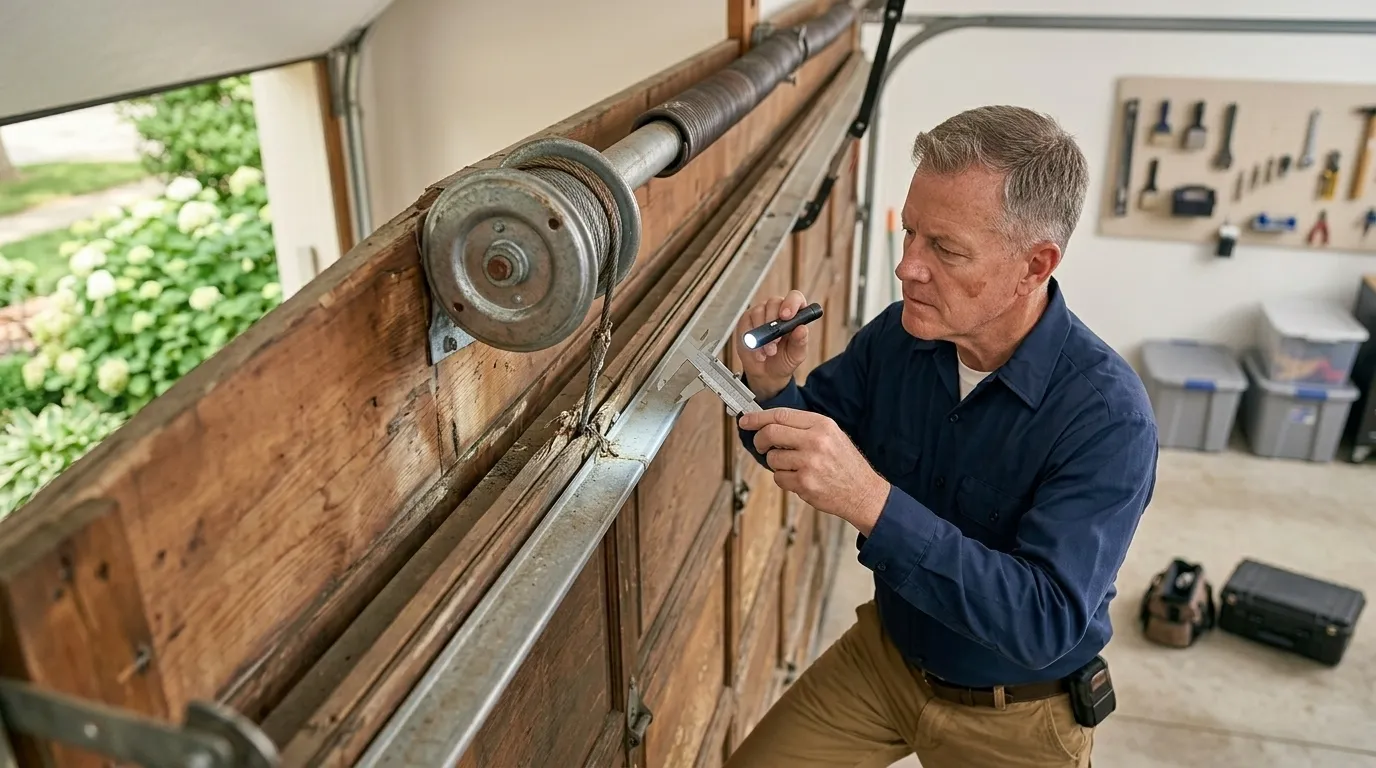
A door built during the 1980s construction wave in Gurnee typically came without the insulation standards used today - doors on houses built before insulation rules generally used a single steel skin over an open cavity, sometimes with a thin foam board glued in later by a previous owner. In a cold-moderate climate like this one, that shows up two ways. First, the garage itself runs colder, which matters if there's a water line, a laundry setup, or a finished room above it. Second, uninsulated steel flexes more with temperature swings than an insulated sandwich panel does, and that flexing is what eventually cracks a panel seam or loosens hinge screws over the years.
This isn't a defect - it's just what an older, single-layer door does in a place that gets real winters. The fix isn't always replacement. Sometimes a retrofit insulation kit and new weatherstripping solve the draft and the flex both, and that's a fraction of the job a full door swap would be.
How we work
What It Costs
We don't have a price list to hand you here, and we're not going to make one up. What we can tell you is what drives the cost conversation on a Gurnee job: whether the door is original to a 1980s or 90s build (in which case replacement parts for that specific spring size or track profile can be harder to source than for a newer door), whether the fix is a spring and hardware repair versus a full panel or door replacement, and whether insulation is part of the scope. A single broken spring on an otherwise sound original door is usually the cheaper problem to solve.
A door that's flexed, cracked, and drafty from three decades of Illinois winters is often past the point where repair makes sense - at that stage, a new insulated door usually costs less over time than patching an old uninsulated one panel by panel. We'll tell you straight which category your door is in before we quote anything.
Questions
Common questions
Why does my garage door feel heavier in winter than in summer?
Cold steel contracts and torsion springs lose some of their lifting force as temperatures drop, so a spring that was already near the end of its life in August often can't keep up by January. It's rarely the opener - check the spring first.
Is my garage door insulated?
If your house was built during Gurnee's main construction wave in the 1980s or 90s and the door has never been replaced, it's very likely a single steel skin with little or no foam fill, which was standard for that era before current insulation rules.
Should I insulate my old door or just replace it?
Depends on condition. If the panels are still straight and the seams aren't cracked, a retrofit insulation kit and new weatherstripping can solve most of the draft and cold-garage problem. If the steel has already flexed and cracked from years of temperature swings, replacement is usually the better long-term move.
Ready when you are
Need a garage door sorted in Gurnee?
Gurnee Garage Door Pros repairs and installs garage doors, springs and openers in Gurnee, IL and the surrounding area.