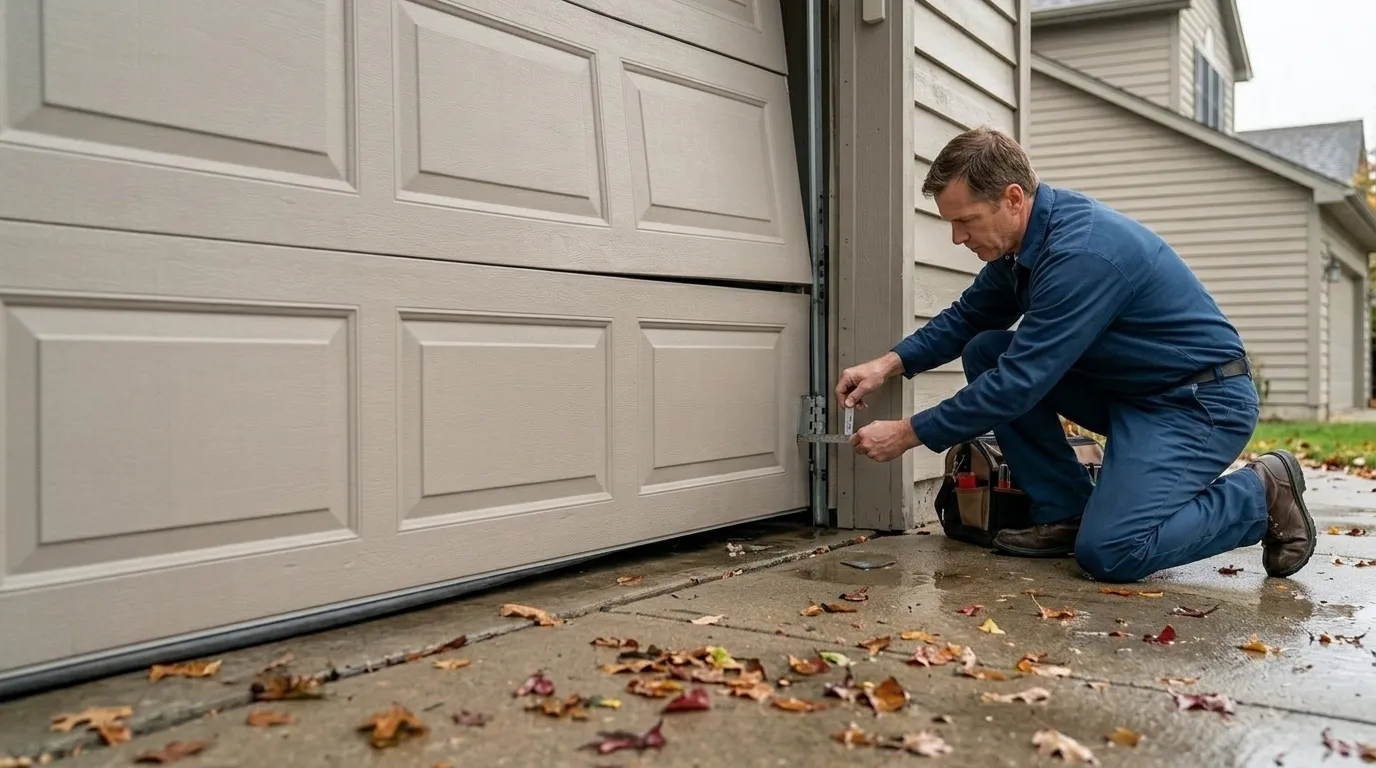
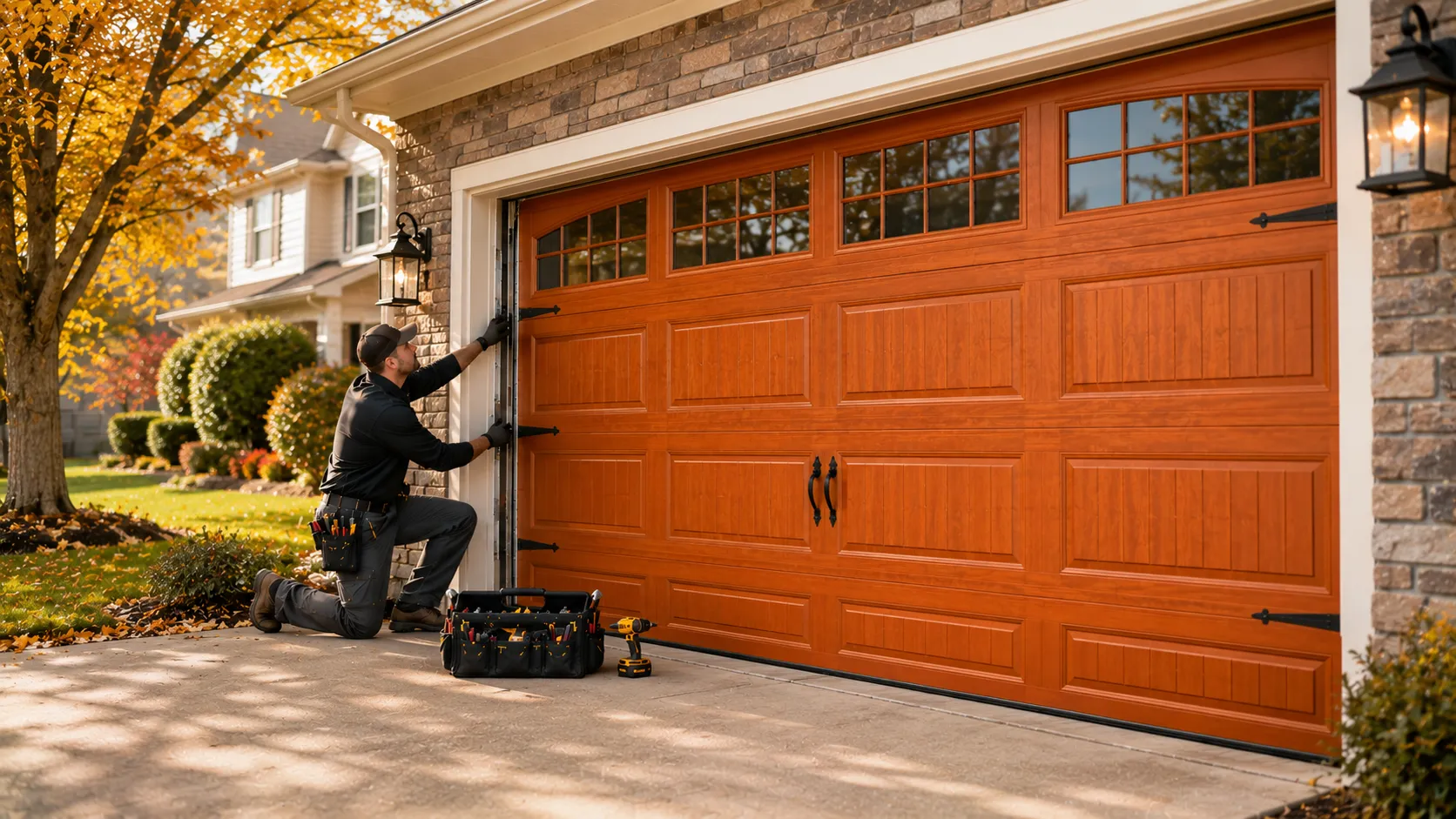
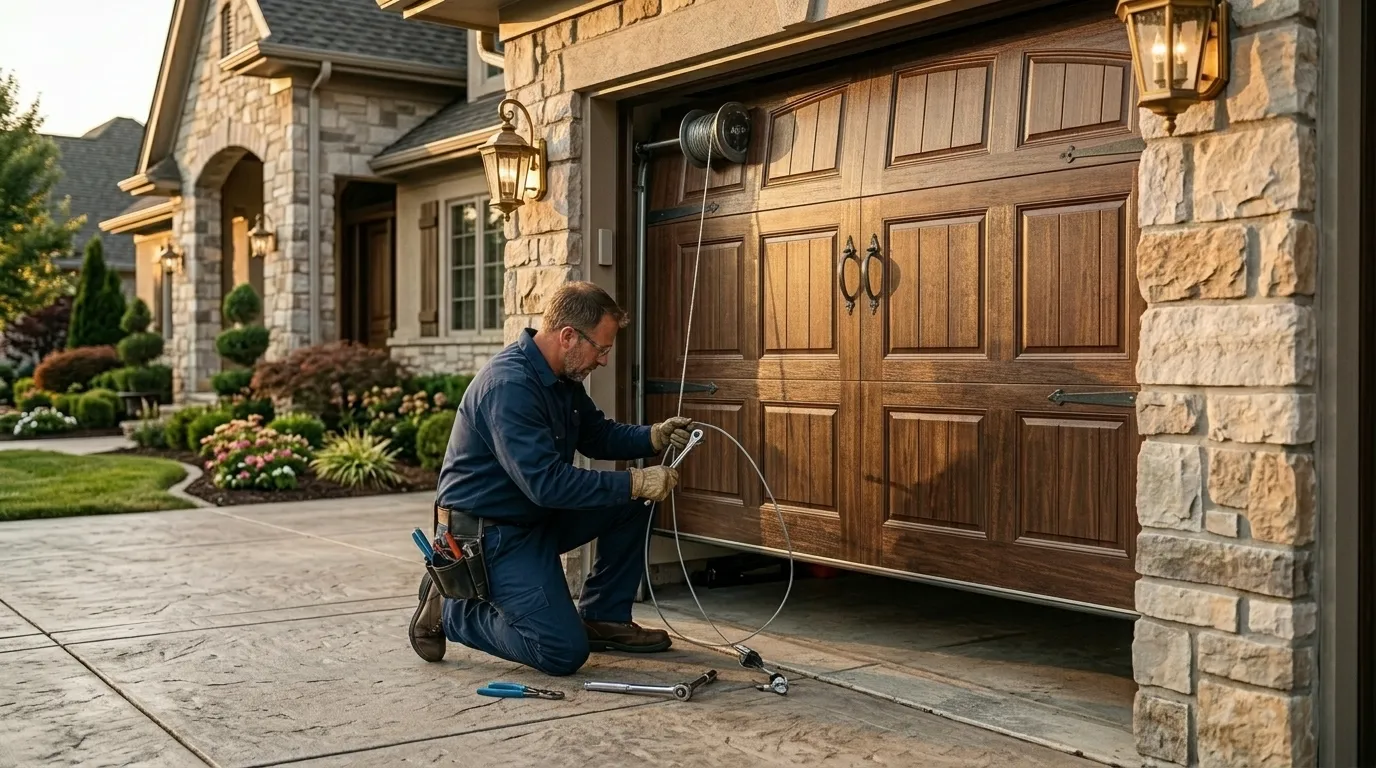
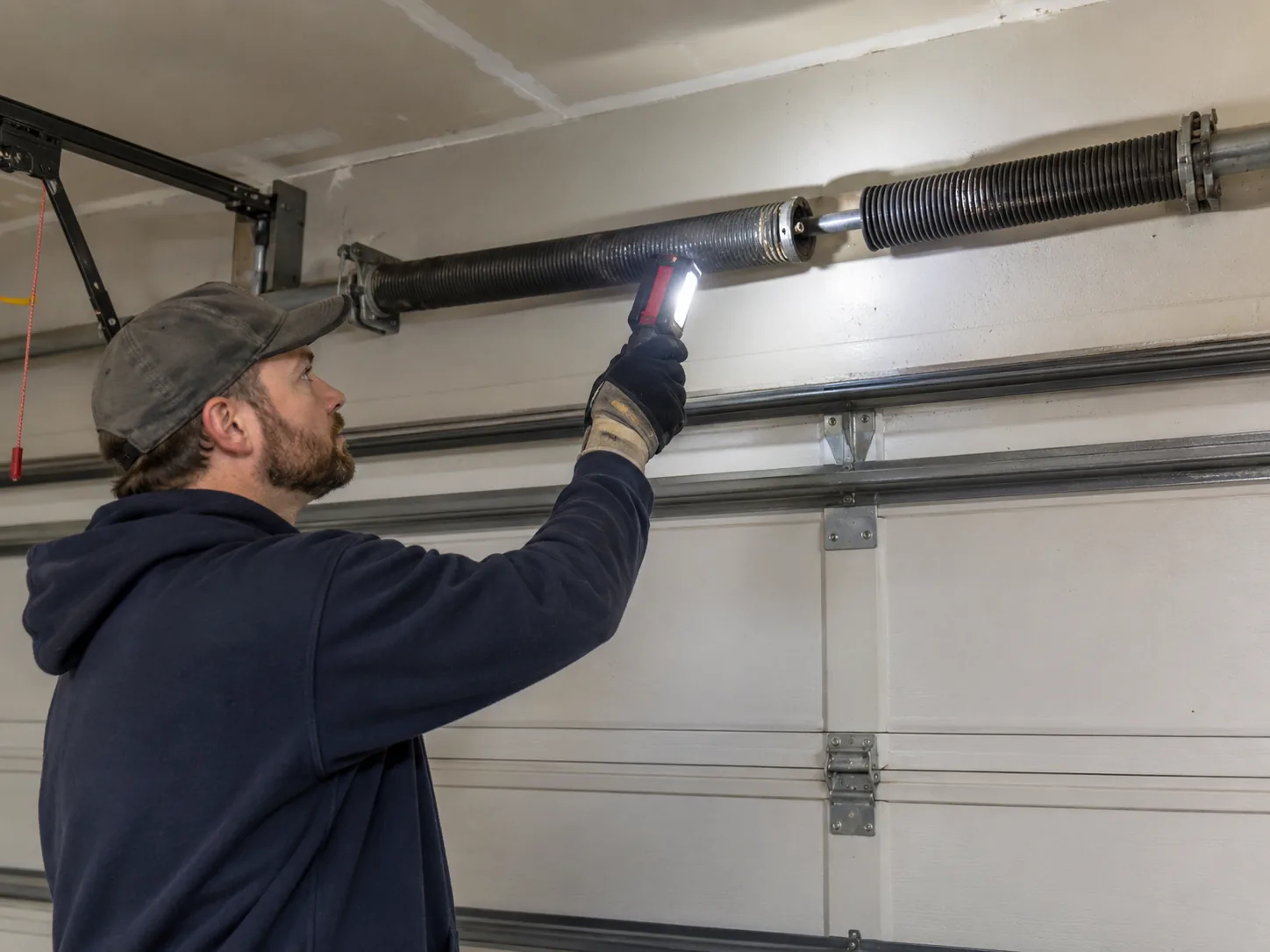
Lindenhurst's own housing stock centers on 1986, squarely inside the sectional-steel-door era that replaced older wood panel doors across the region. Commercial and light-industrial bays that went up alongside that same residential push tend to share the same bones: single torsion springs sized for a lighter door, galvanized track bent to a standard that's since been superseded, and openers rated for cycle counts far below what a working bay actually sees. When we get a call about a door that slams the last foot of travel, or a motor that hums but doesn't lift, it's almost always one of those original components finally giving out after decades of daily use rather than a one-off accident. The symptom to watch for isn't drama - it's a door that's gotten slow, loud, or uneven closing at the same spot every time. That's fatigue, not a fluke, and it's the kind of wear that shows up earlier on doors doing forty cycles a day than it does on a house door doing four.