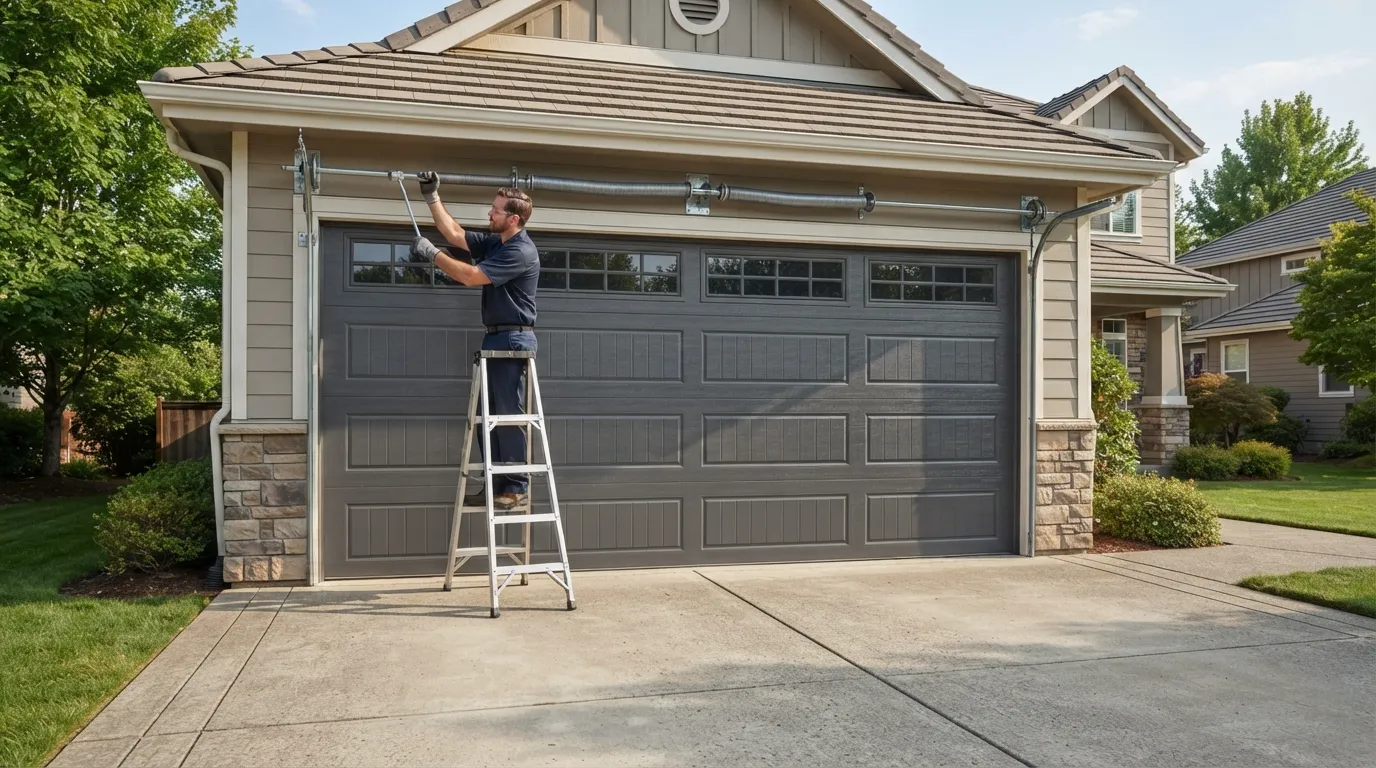
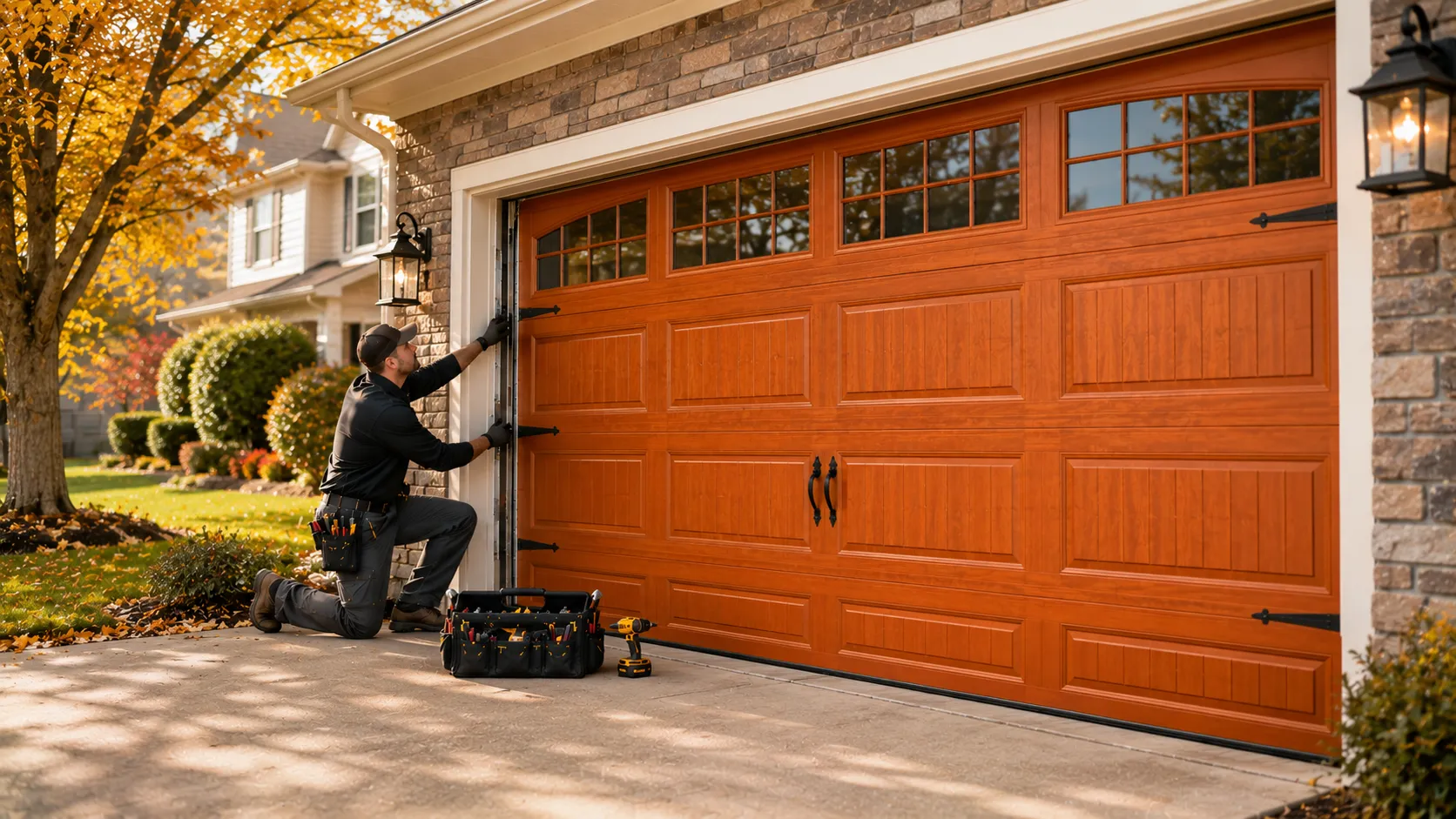
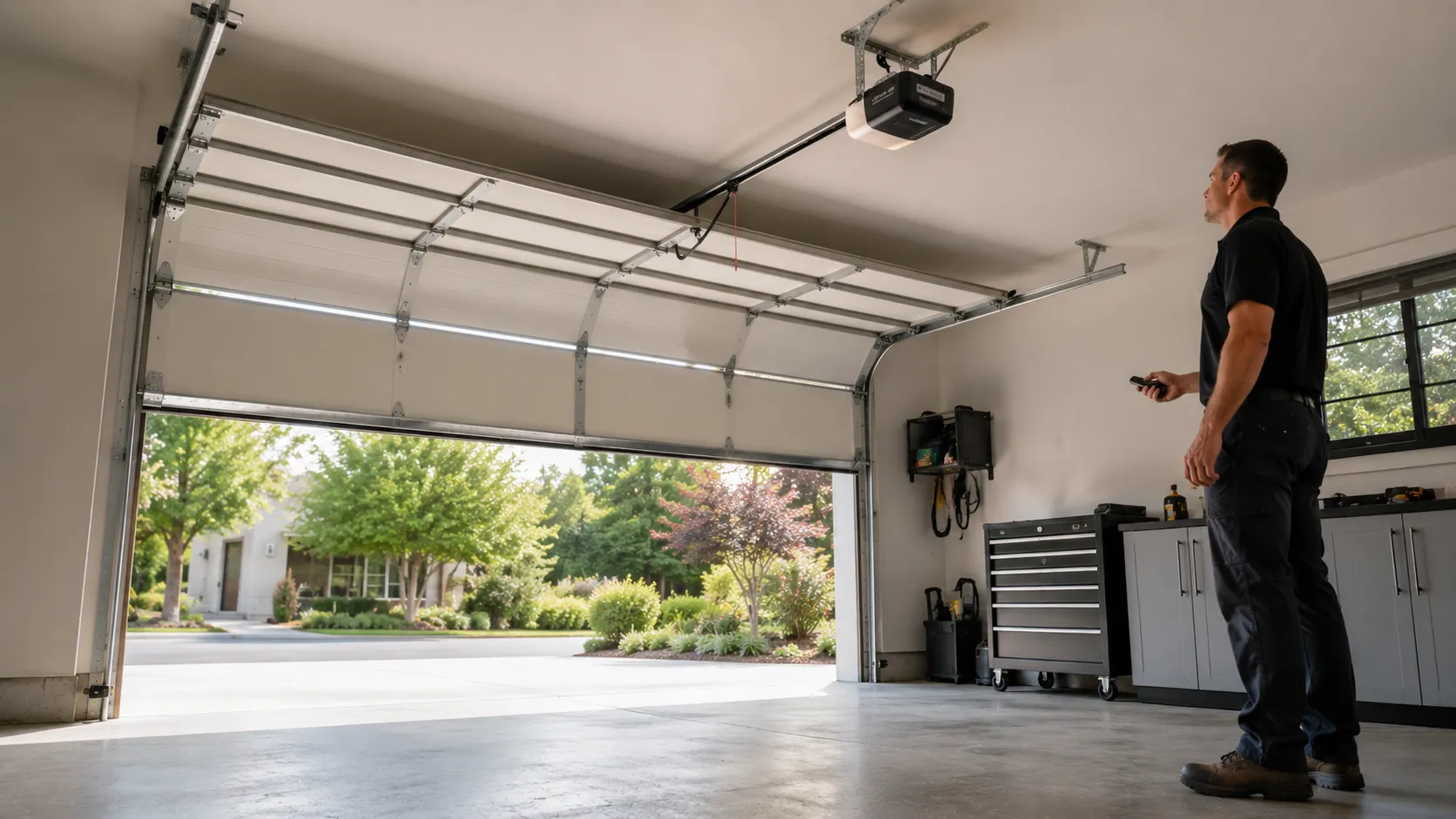
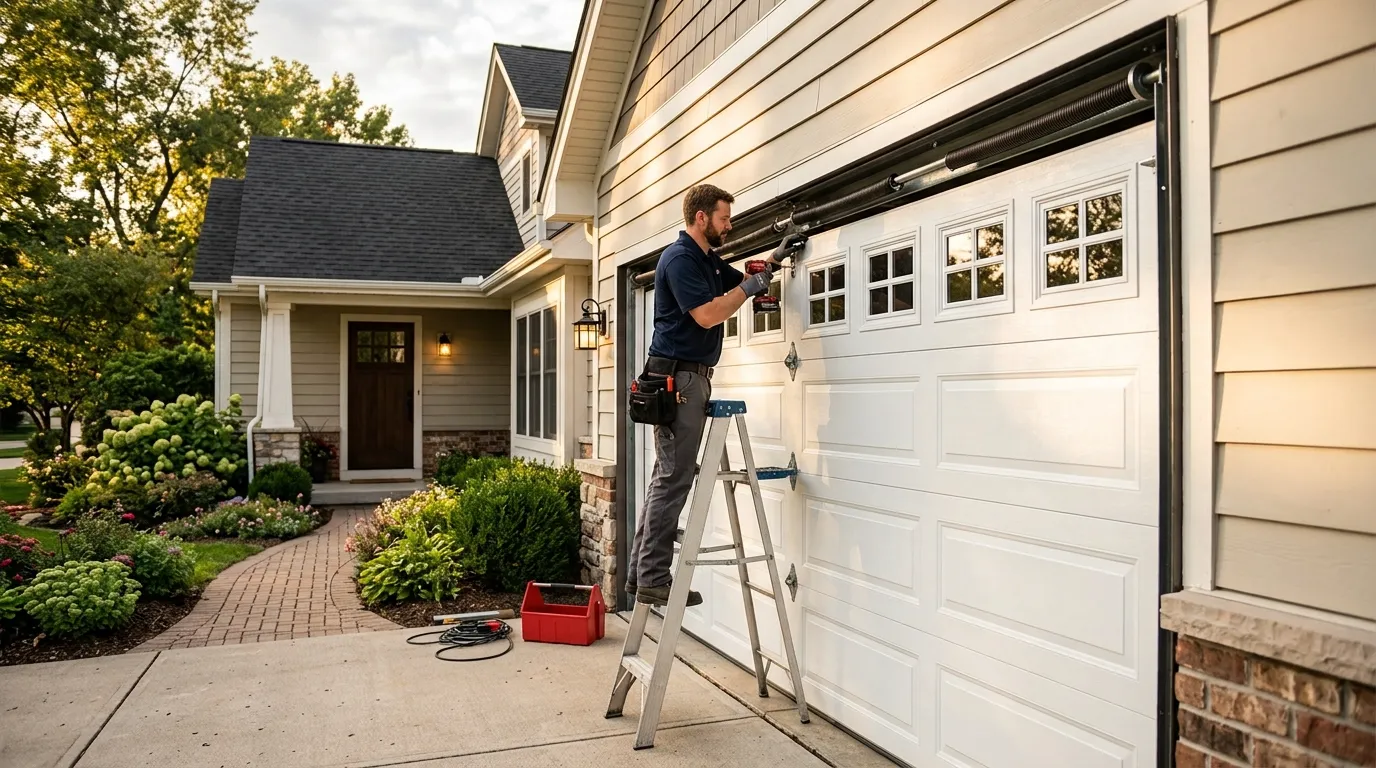
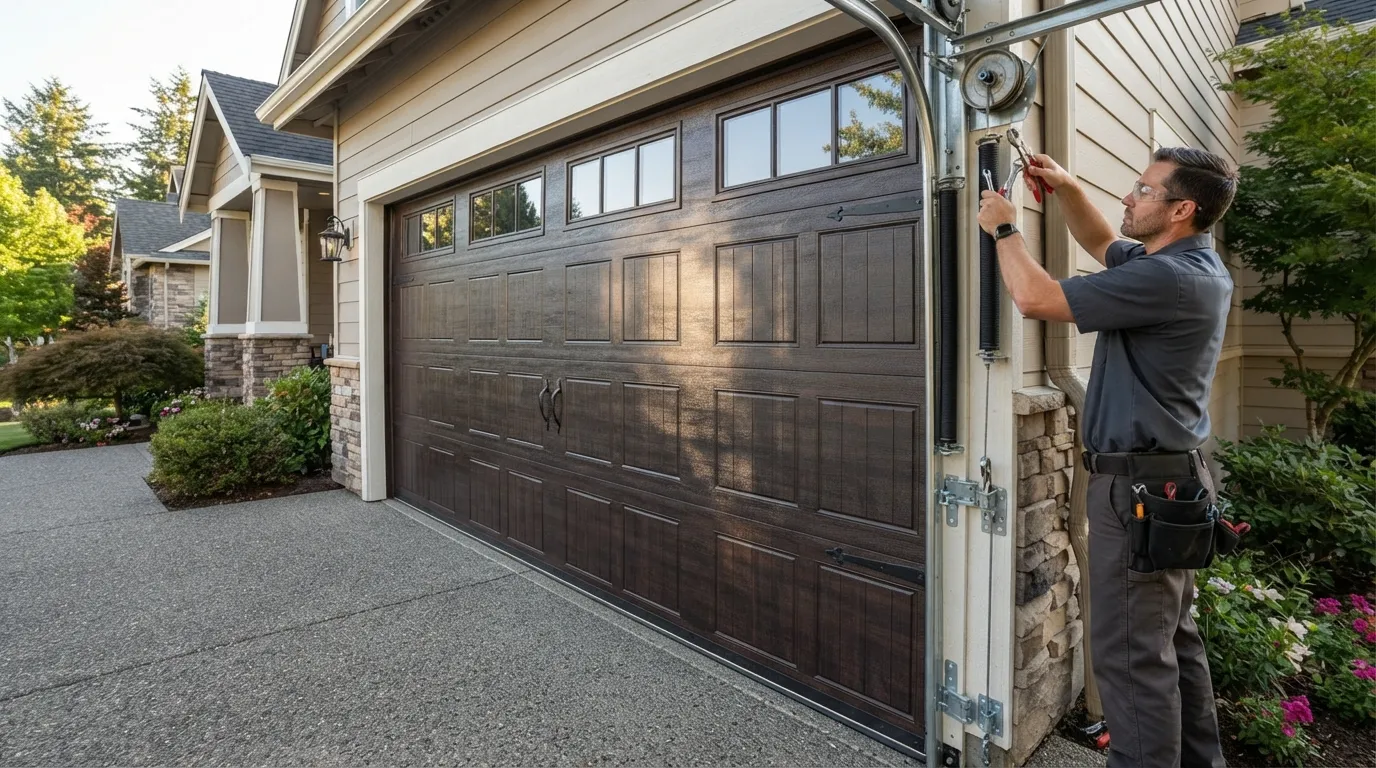
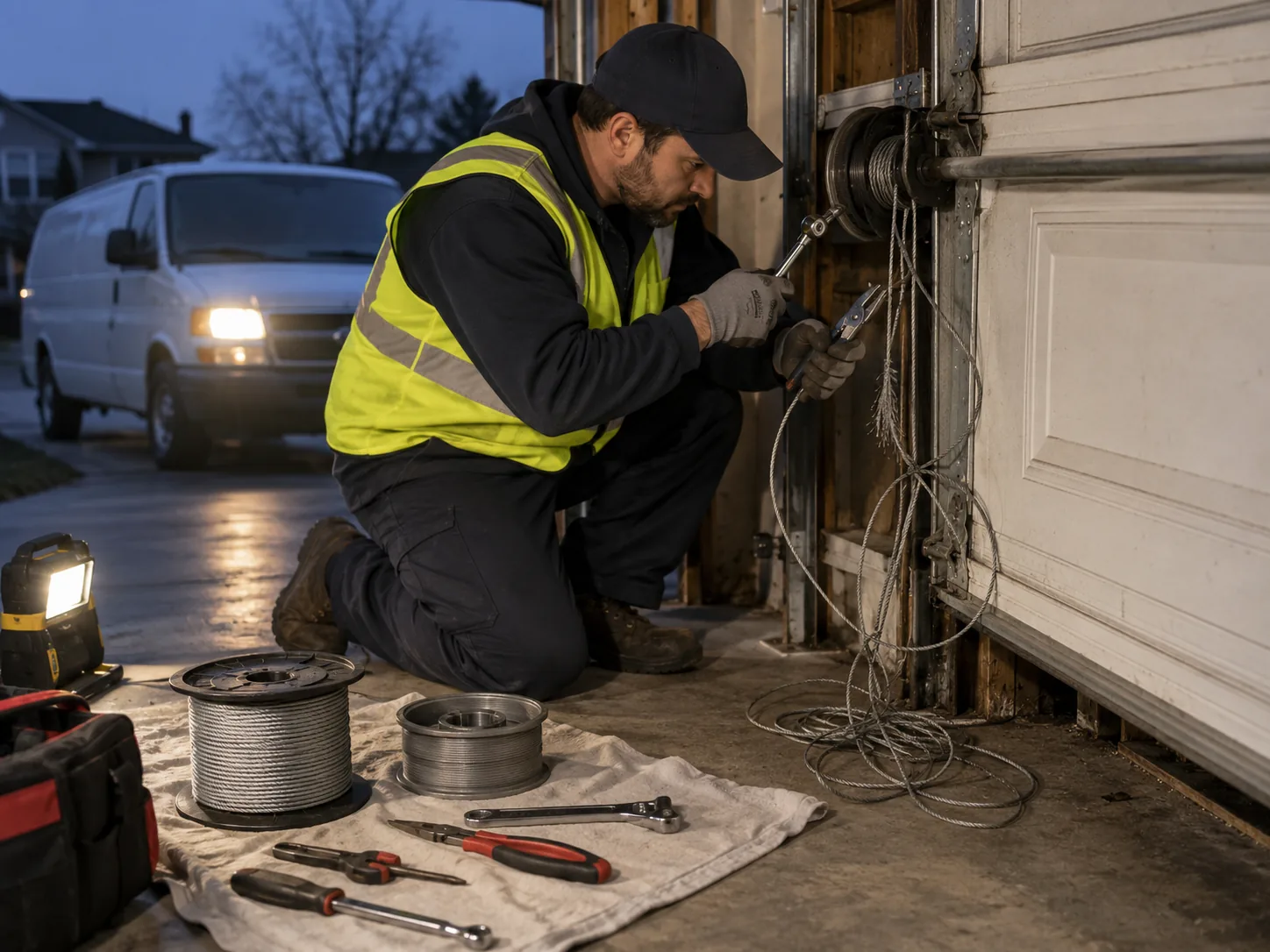
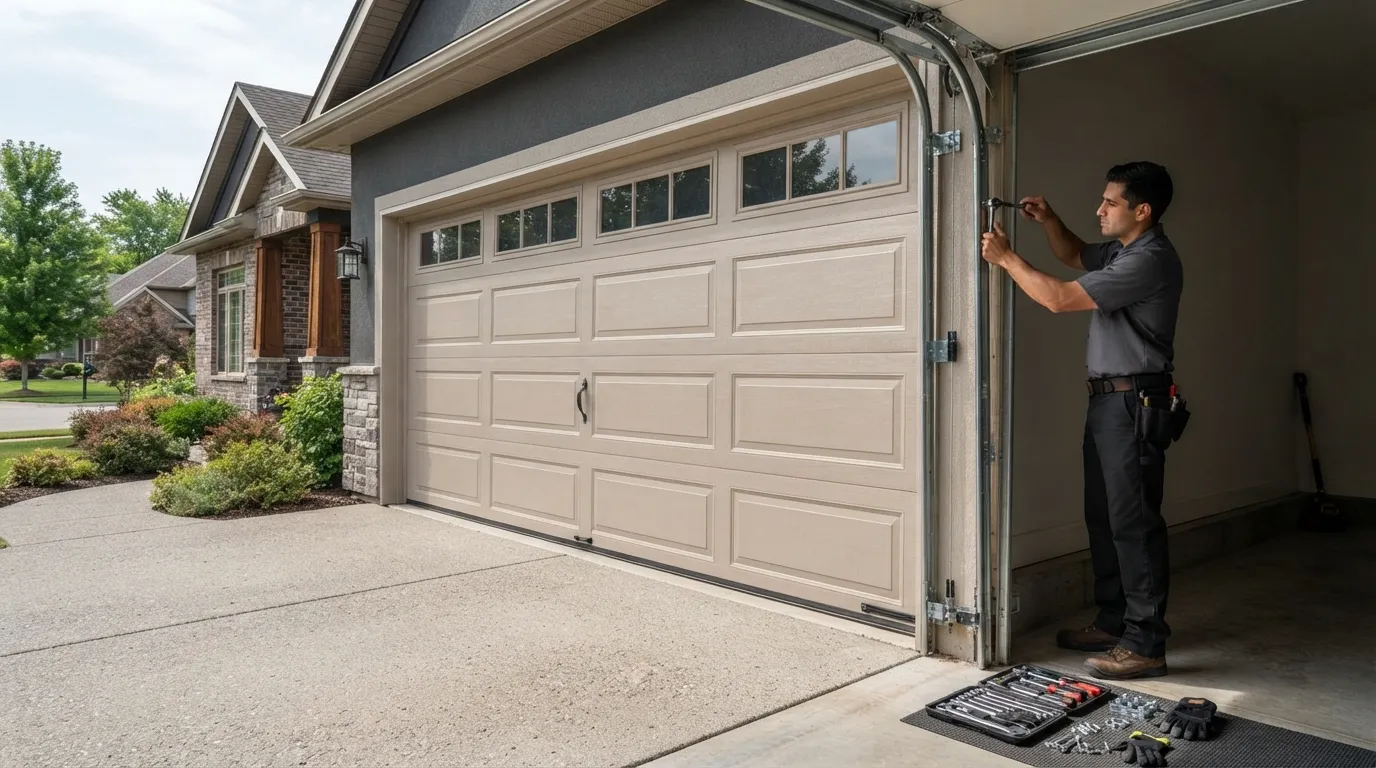
Most of the building stock across this service area went up between 1946 and 2009, with the median landing around 1986, and across the 53 named pockets we cover, the bulk of that construction - commercial strips and light-industrial units included - clustered in the 1980s and 90s. That matters because a lot of the sectional doors and chain-drive openers on these buildings are original or close to it, built to the spec and duty cycle standards of that era, not to what a busy loading dock actually demands thirty-plus years later.
Layer the climate on top of that. This corridor sits in a cold, moderate climate band, and the freeze-thaw swing between a mild afternoon and an overnight drop does real work on steel doors: seals stiffen, chain-drive grease thickens, and panel seams that had a little play in July tighten up enough to bind in January. A door that ran smooth all summer starts grinding on the track the first cold week of the season, and that's not bad luck - it's an 80s-vintage door meeting a winter it wasn't stress-tested for.
The combination - older hardware plus seasonal cold - is why commercial door failures here cluster in a predictable pattern rather than happening at random.