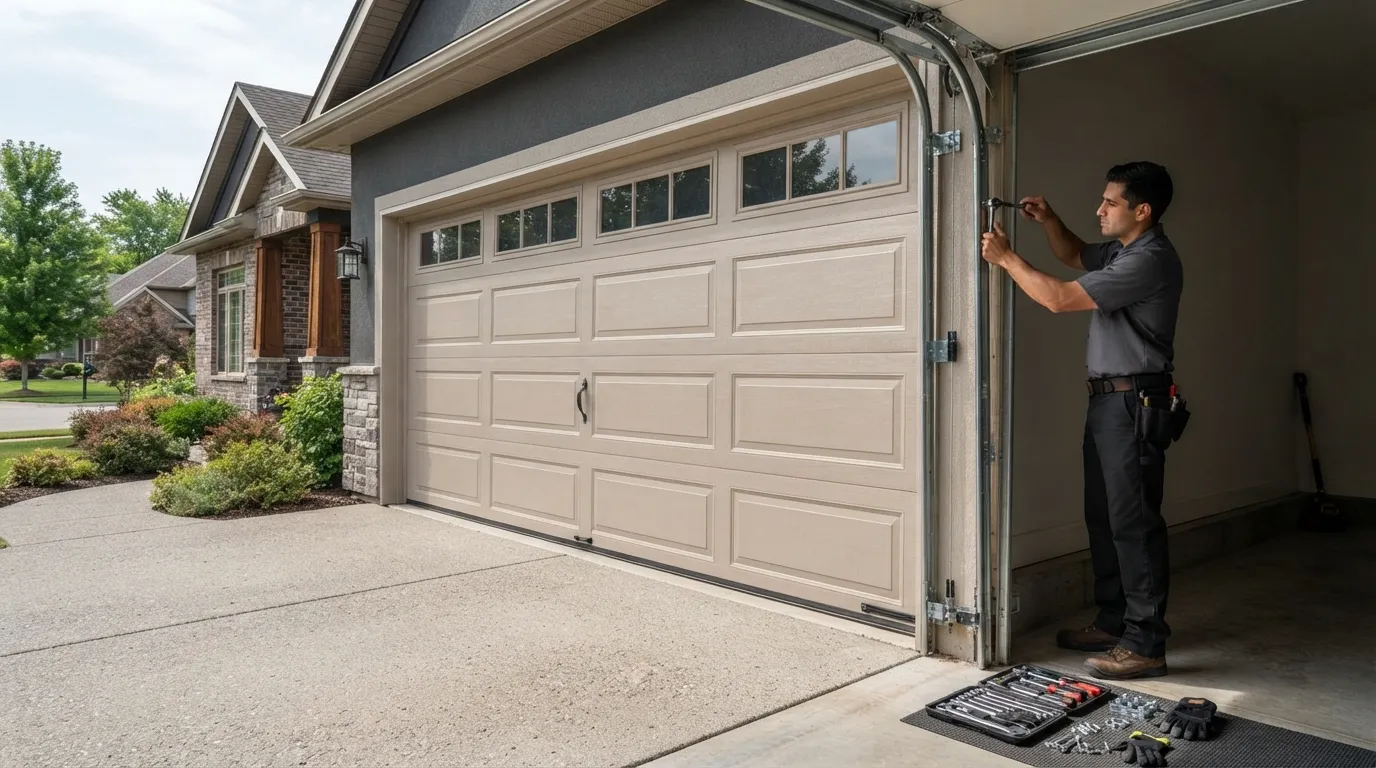
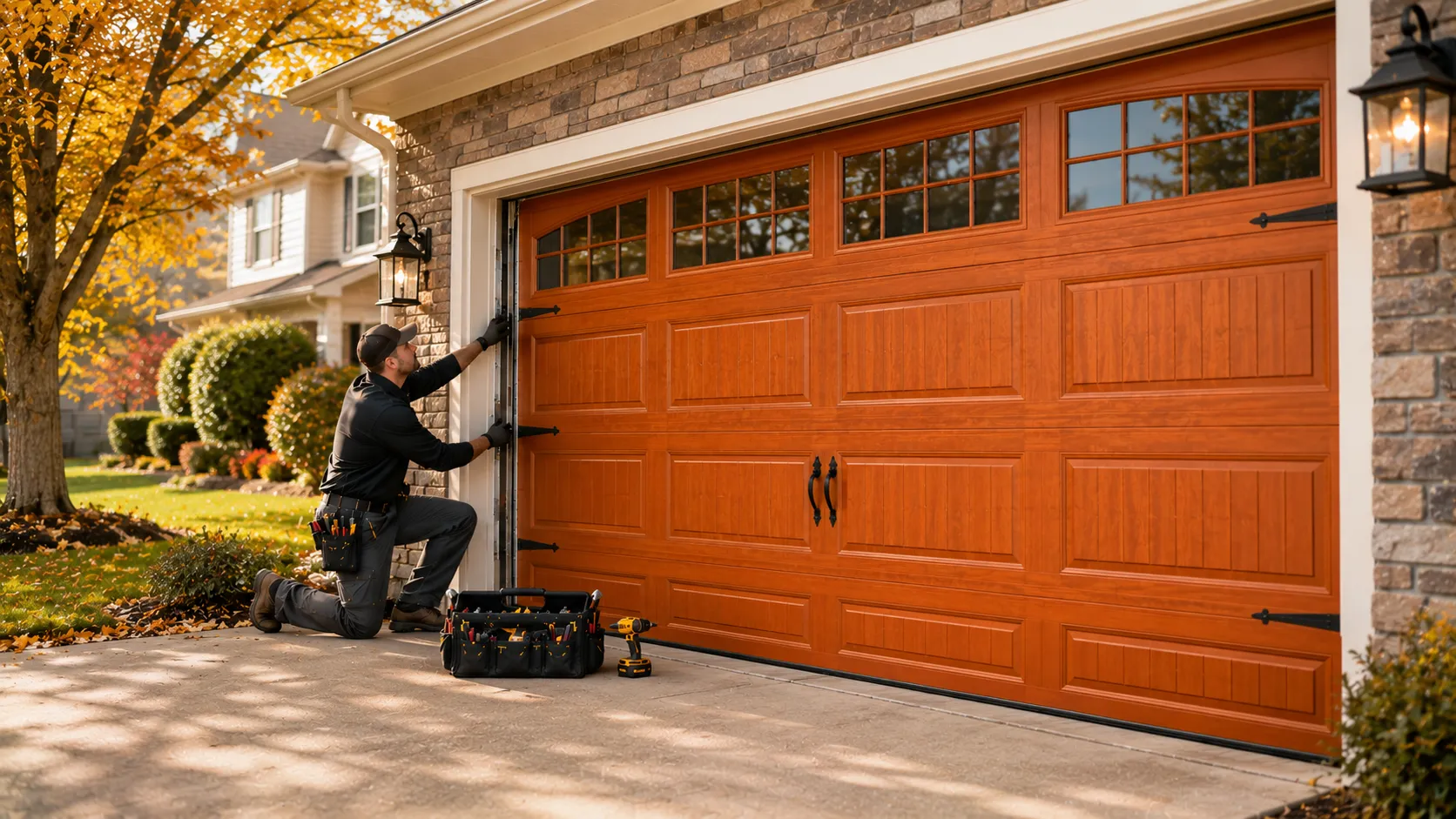
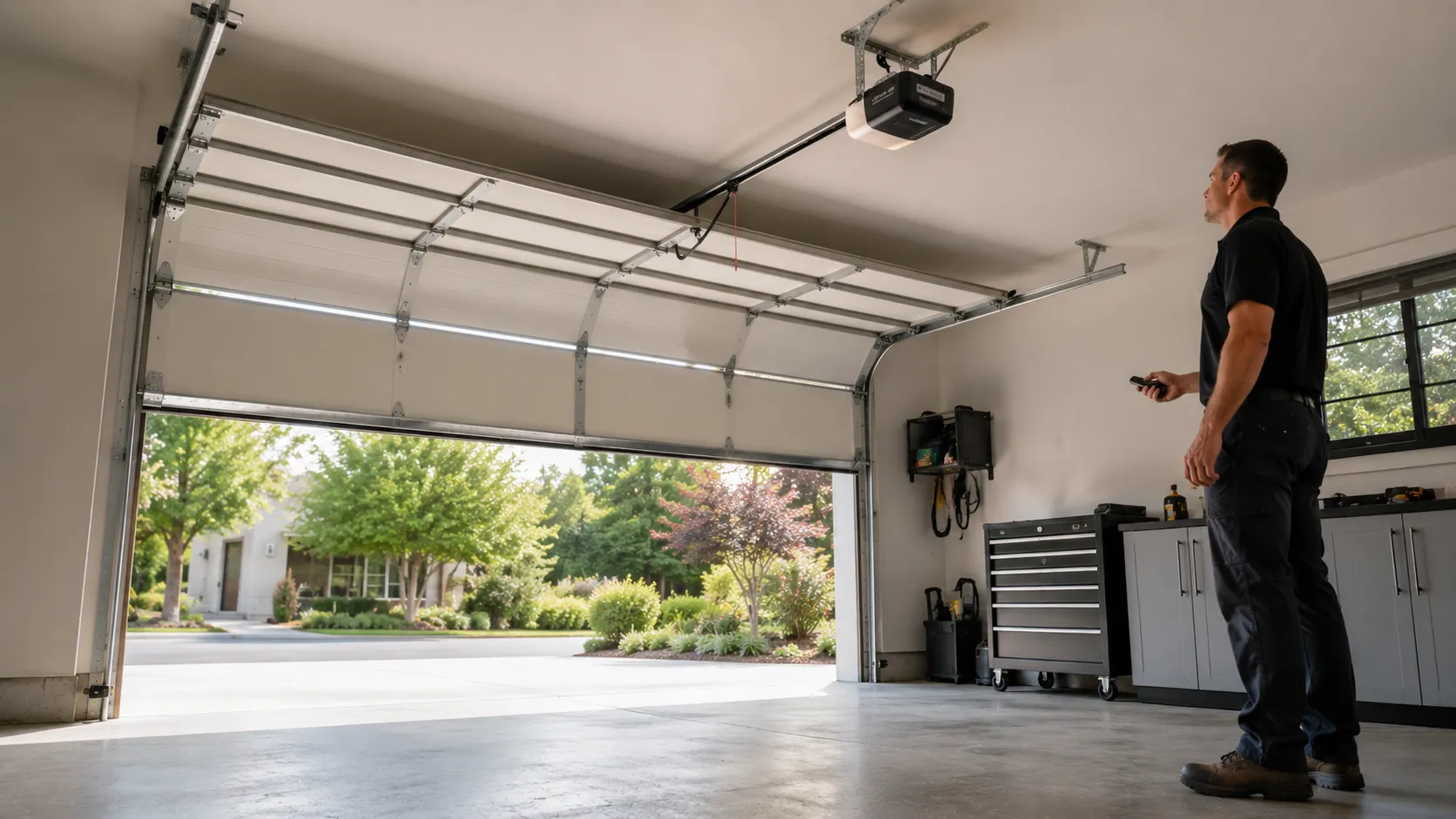
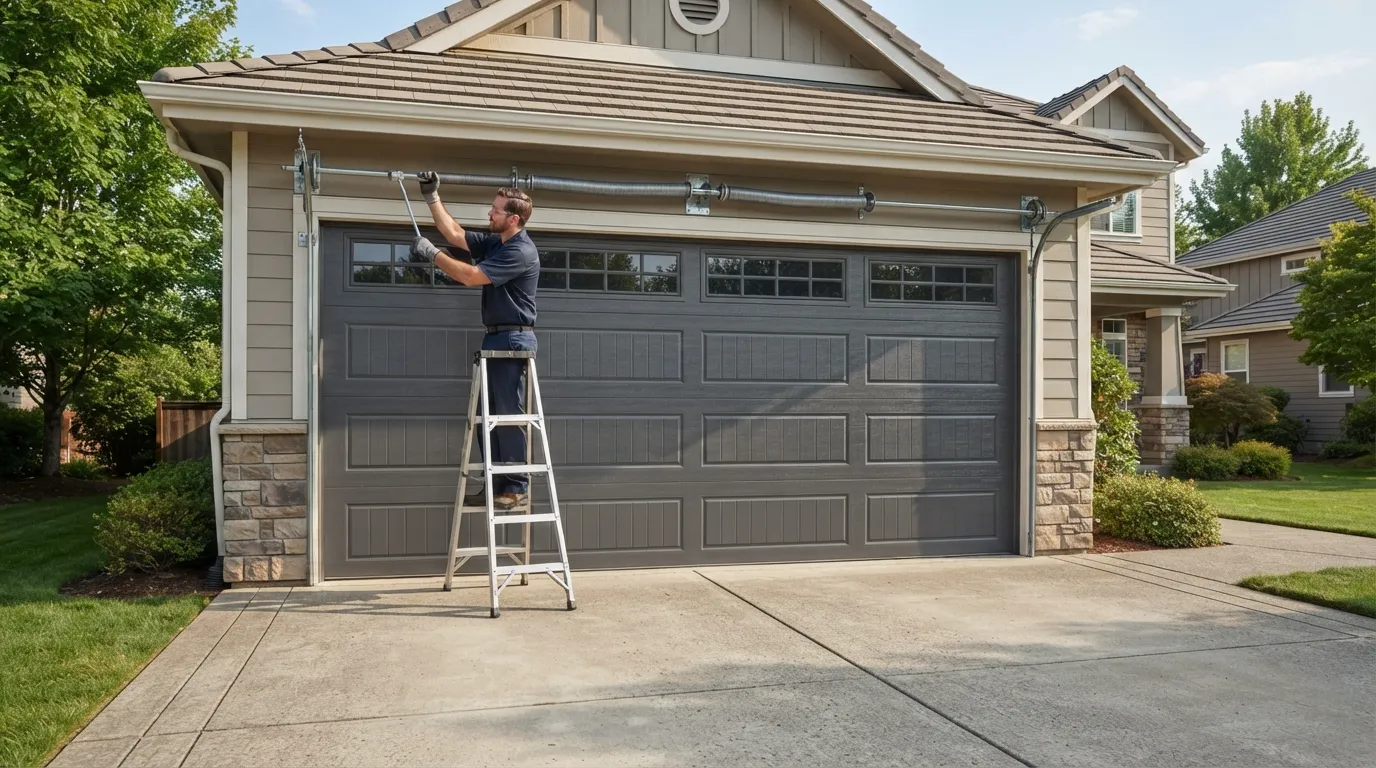
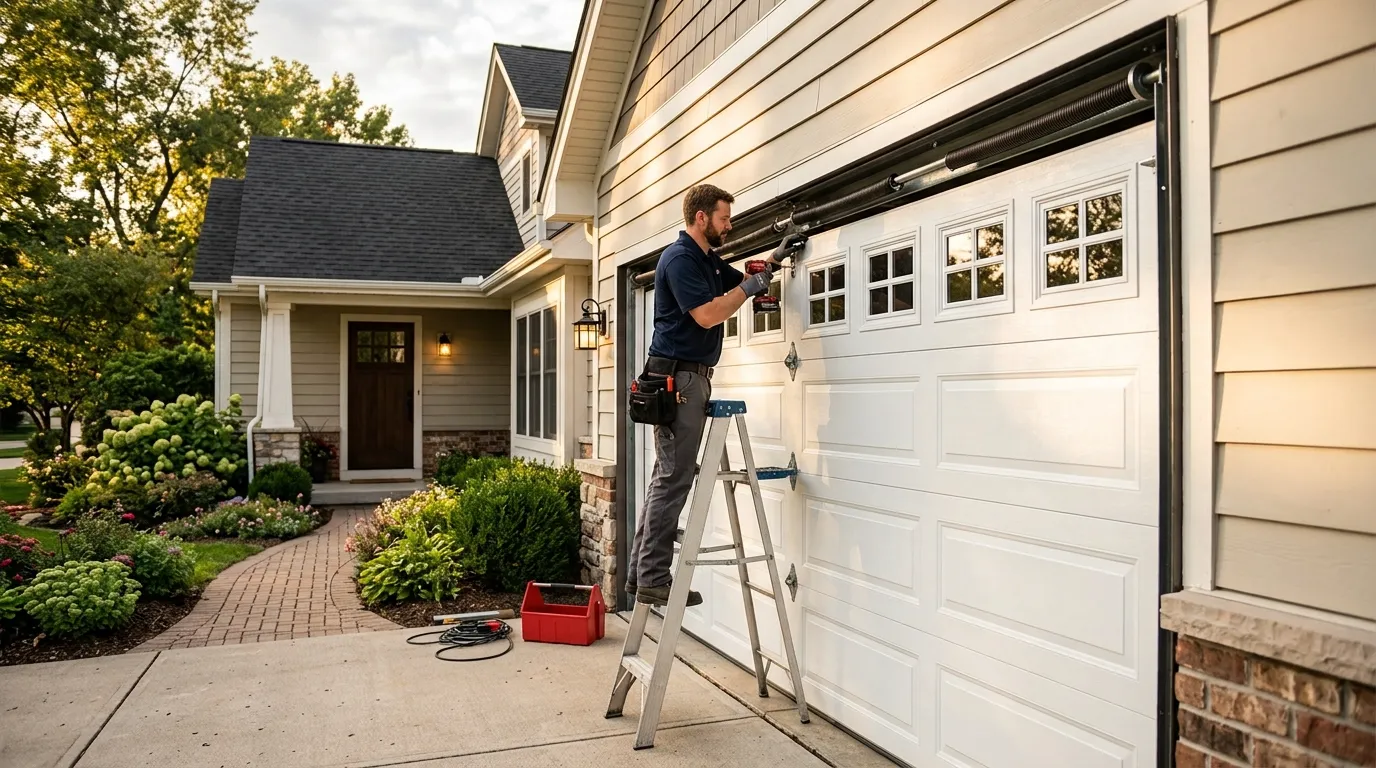
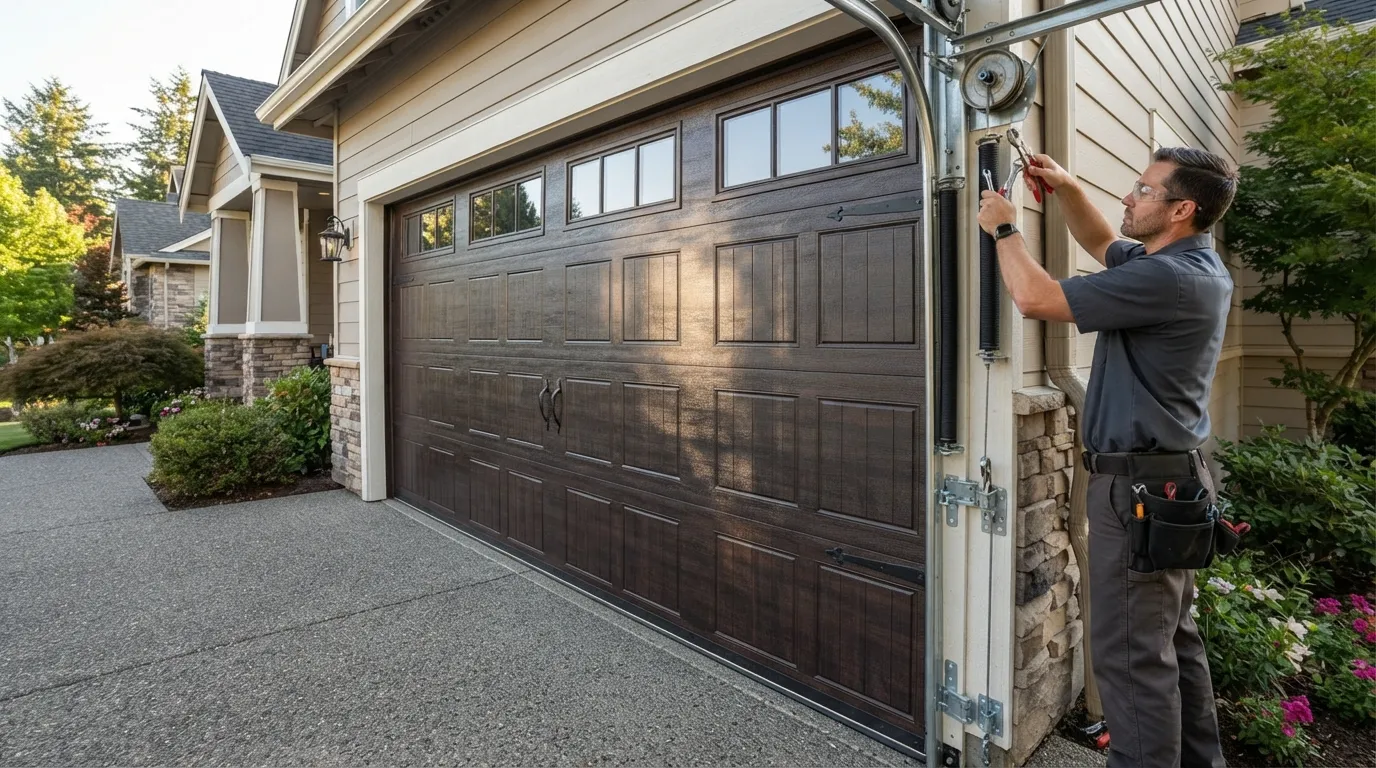
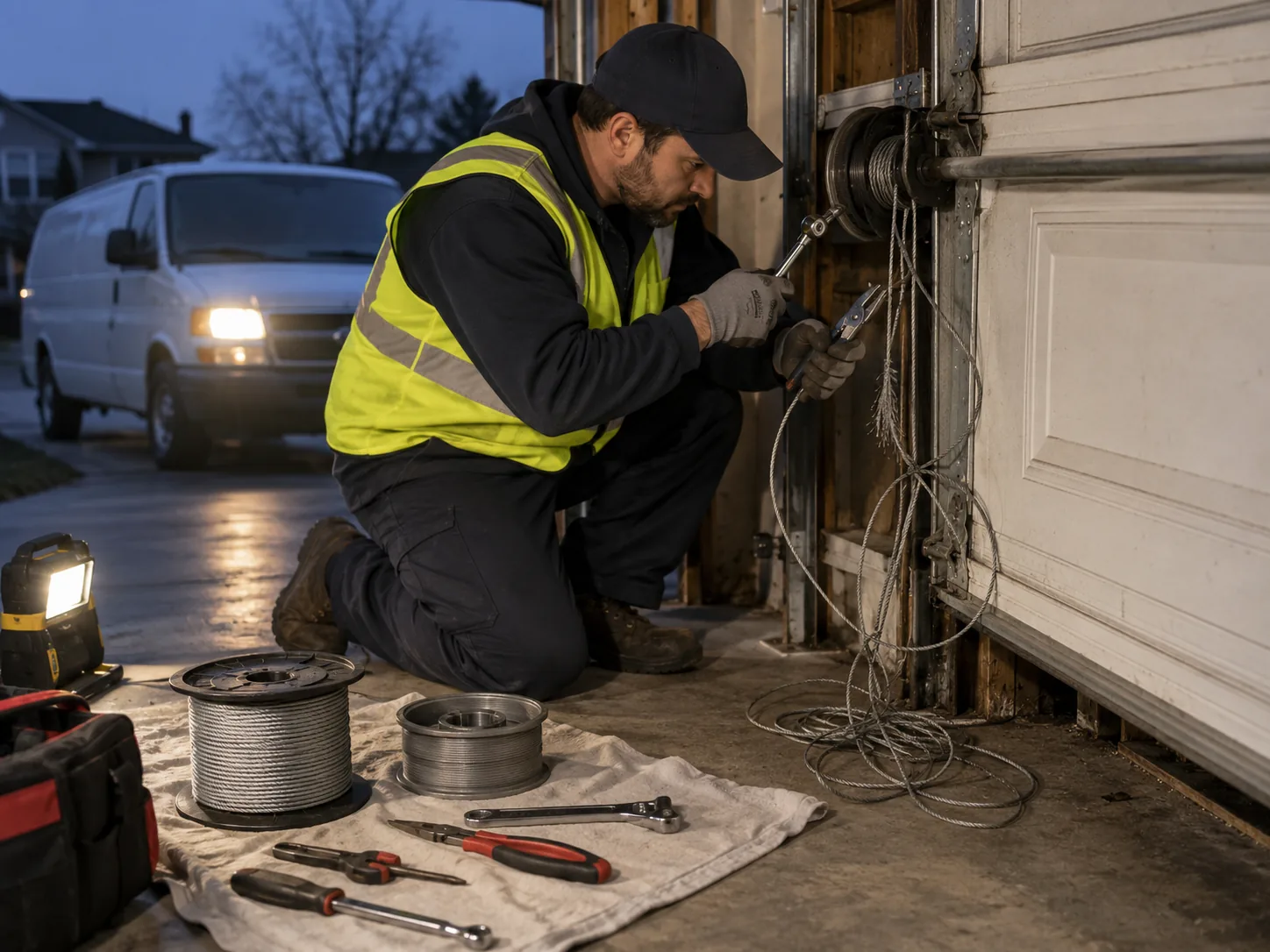
Gurnee sits in a cold-moderate climate band, and that matters more for garage doors than most homeowners expect. Steel torsion springs lose a measurable amount of tension as temperature drops, and a spring that was already near the end of its cycle life in October can snap outright in January when the metal contracts and the door's dead weight doesn't change. Houses built in the 1980s and 90s - which describes most of the stock across the 53 named areas in this service area - were built to the codes and hardware standards of that era, meaning many still run on the original torsion setup or a first-generation replacement that's now itself decades old.
That combination - cold swings plus an aging spring population - is why the failure curve here spikes hard in winter rather than spreading evenly across the year. A door that's fine in August can seize or drop without warning once temperatures start cycling below freezing overnight and back up during the day, because that swing is what fatigues the metal fastest. Newer subdivisions with post-2000 construction see fewer of these calls simply because the springs haven't logged as many freeze-thaw cycles yet.