
Small town aging presence
That matters for maintenance because a smaller town means less turnover of doors and openers; a lot of what's out there has been quietly aging in place since the original install.
Libertyville, Gurnee
Libertyville runs about 7,573 households on mid-1970s hardware. We drive the 6 miles from Gurnee to tune springs, tracks, and openers before winter finds the weak point.
Symptoms
Libertyville is a small town as our service area goes - around 7,573 households, not the sprawling stock you get in some of the bigger towns we cover.
That matters for maintenance because a smaller town means less turnover of doors and openers; a lot of what's out there has been quietly aging in place since the original install.
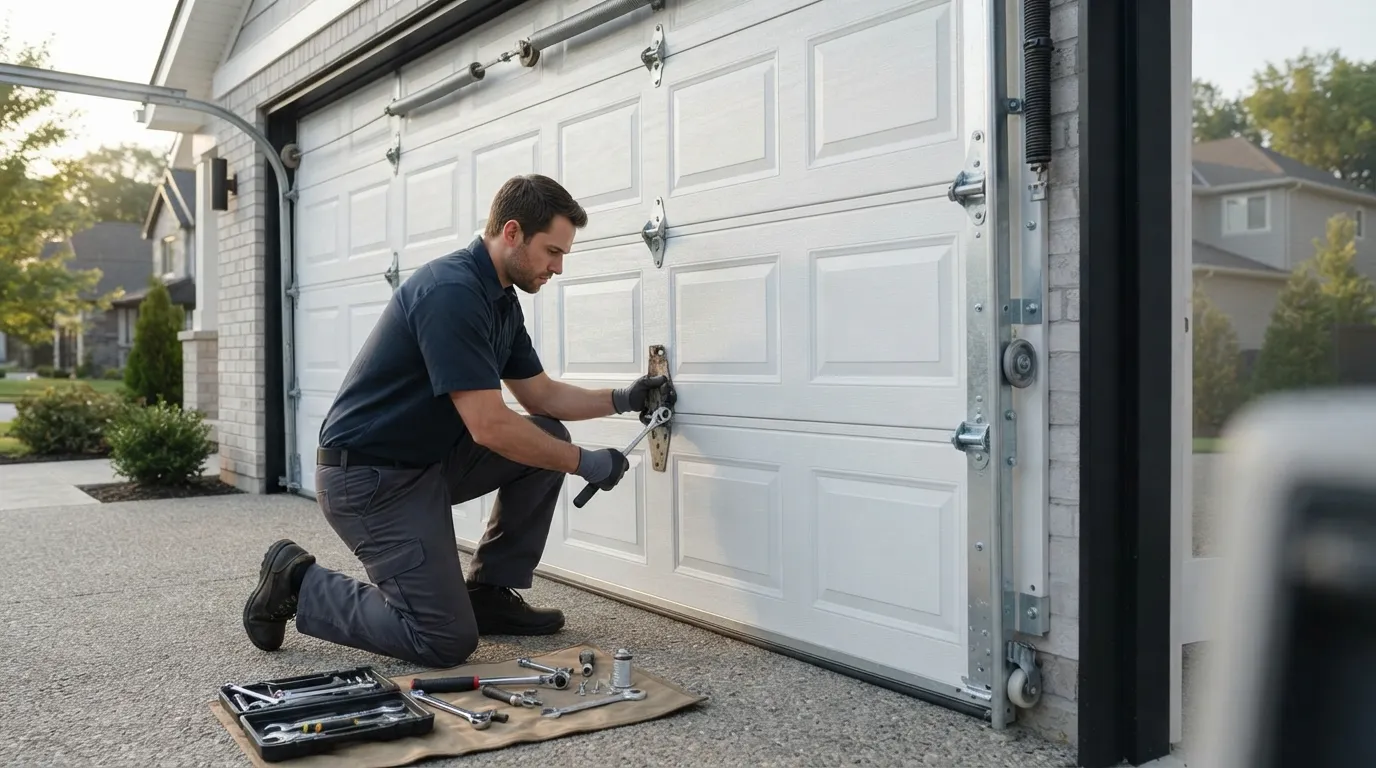
The median home here went up in 1976, which puts a big share of doors and openers into a specific window: older torsion setups, openers that have outlived at least one control board, and hardware nobody's touched since a home inspection years back. The symptom we hear most from this stretch isn't a dead door.
It's a door that still works but groans, hesitates on the way up, or needs a shove to seat right at the bottom. That's wear talking, not failure yet - which is exactly when a maintenance visit does the most good and costs the least.
Watch-outs
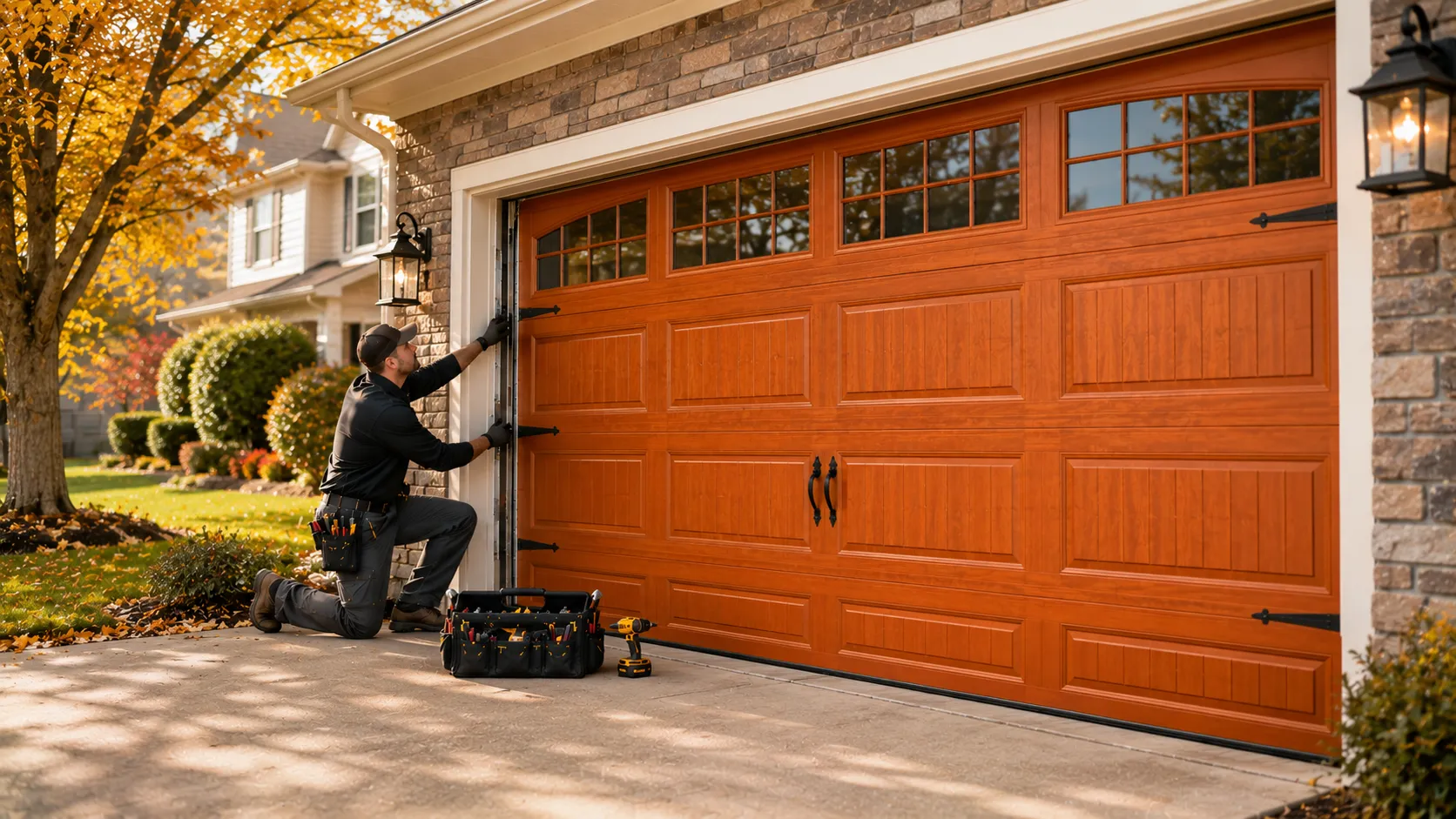
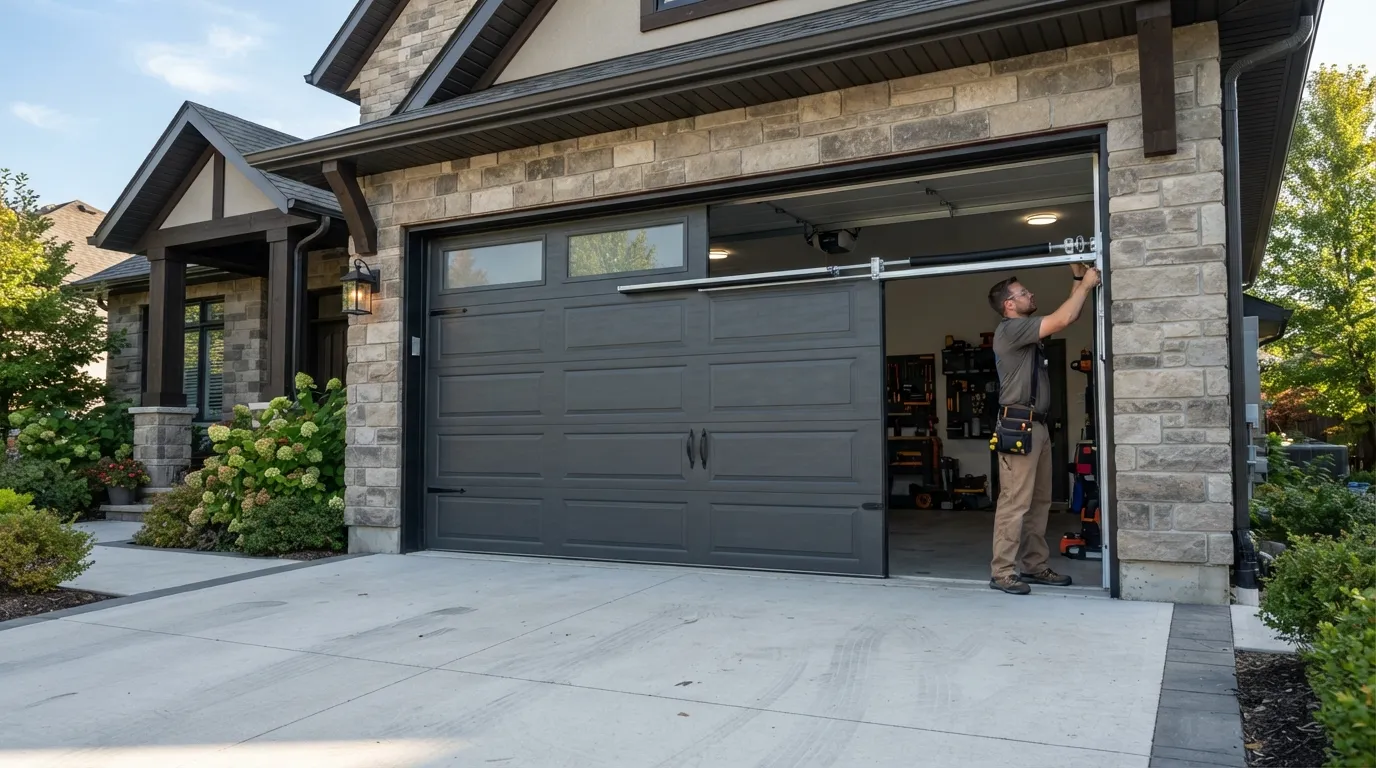
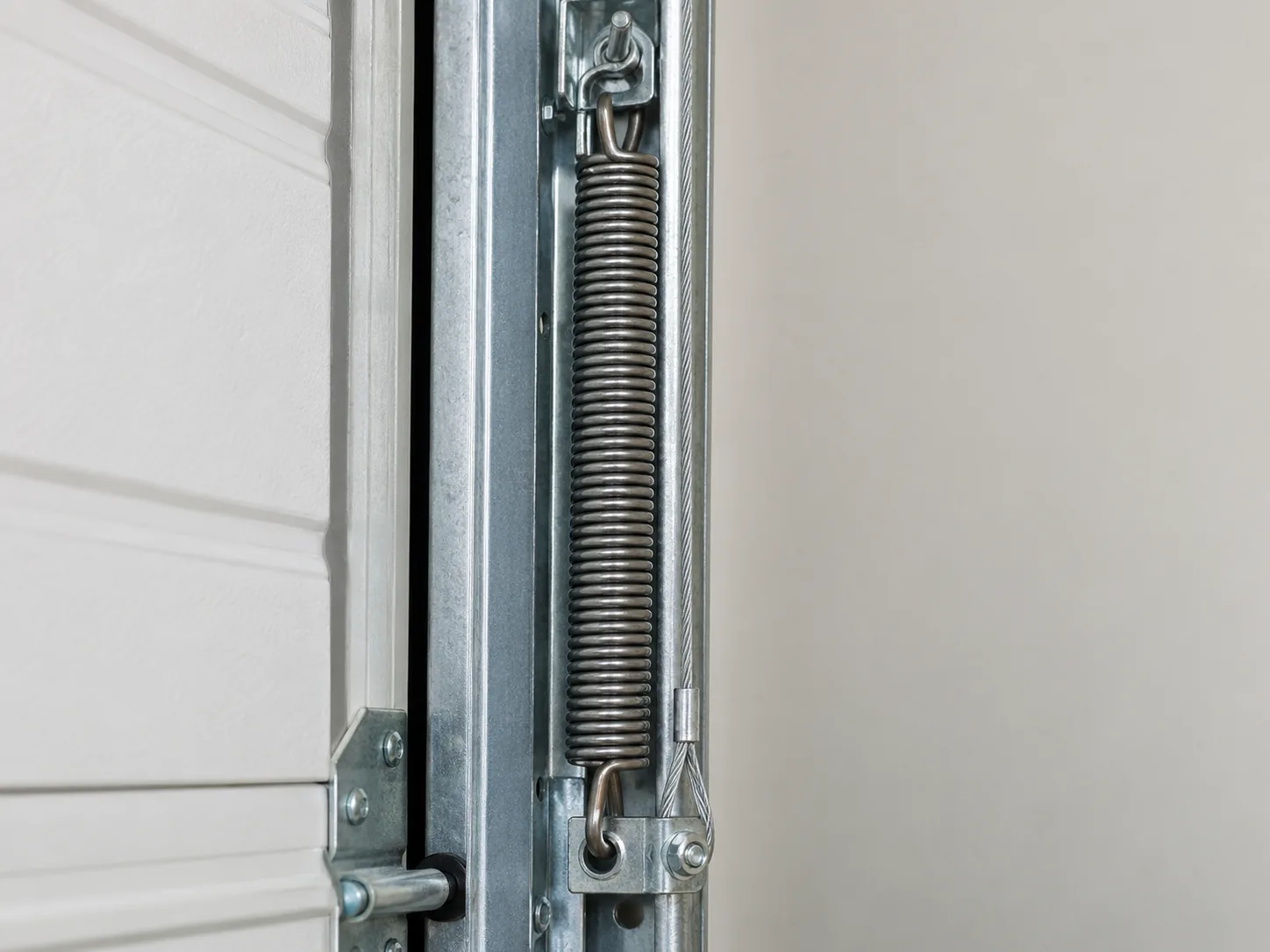
A door built or installed around 1976 has had close to fifty winters on the same springs, cables, and rollers, even if some of those parts were swapped once along the way. Steel fatigues on a schedule, and a torsion spring rated for a set number of cycles doesn't care how well the door looks otherwise. We're in a cold climate band here, and that's the part owners in this town underestimate: cold makes lubricant stiffen, metal contract, and openers work harder to move a door that's tighter in its tracks than it was in July. On a 1970s-era door, that stress lands on rollers and hinges that were never top-grade to begin with. Left alone, a stiff spring becomes a snapped one, usually on the coldest morning of the year. We check spring balance, cable fray, track alignment, and opener force settings - the things that turn a slow decline into a sudden call.

Pricing
We don't have a Libertyville-specific price sheet to quote here, and we're not going to guess at one. What we can say is that maintenance pricing doesn't move with the town - it moves with what's actually wrong with the door in front of us, and a straightforward tune-up costs a lot less than a spring failure that takes out a cable or bends a track on the way down. Libertyville's median household income sits well above the wider service area's, and higher-income towns tend to book maintenance ahead of a failure rather than after one. That's the honest math on cost: paying for an inspection and adjustment now is cheaper than an emergency spring replacement later, and it's also easier to schedule on your terms instead of the door's.
Booking
We're based in Gurnee, six miles out, and Libertyville is a normal stop on our route - not a special trip, not an add-on fee, just part of the area we cover every week.
There's no local branch or drop-in counter here, so booking goes through the same channel as the rest of the area: you tell us what the door's doing, we schedule a truck out.
Given the age of a lot of the hardware in town, we'd rather look at the whole system in one visit - springs, cables, tracks, opener - than come back twice for two separate symptoms that trace to the same worn part.
Timing
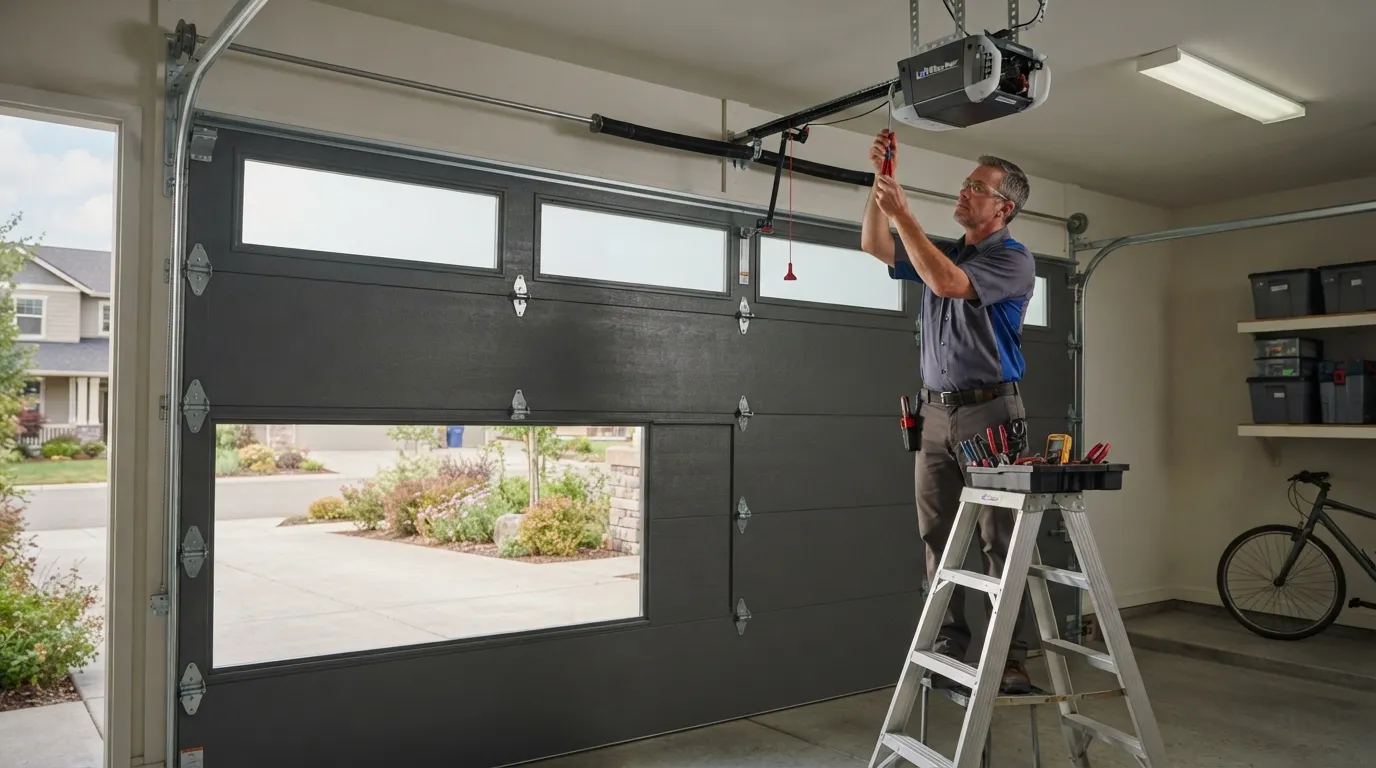
A standard maintenance visit - lubrication, hardware check, spring balance, opener force and travel limits - runs under an hour on most doors. Where it runs longer is on original 1970s-era hardware that hasn't been serviced in a while: rusted rollers, a cable starting to fray, a track that's slightly out of plumb. Those add time because we're not just adjusting, we're deciding whether a part is still safe to leave in place. One honest limitation: if we get into a door and find a spring near the end of its cycle life, we won't just lubricate around it and call the visit done - we'll tell you it needs replacing, because sending you off with a maintenance sticker on a spring that's about to go isn't a service, it's a liability we're not willing to hand you.
Questions
Once a year is the general rule, but with a lot of the housing stock here dating to the mid-1970s, we lean toward checking older doors more closely - especially before the cold sets in, since our winters are hard on aging springs and stiff lubricant on tracks.
No. We run out of Gurnee, about six miles away, and Libertyville is a regular stop on our route. There's no local branch or drop-off point here, just a truck that comes to you on schedule.
Depends on the door. A 1970s-era door with a sound frame and no cracked panels is usually worth maintaining. If the springs, cables, and opener are all near the end of their life at once, replacement can end up cheaper than repeated repair calls.
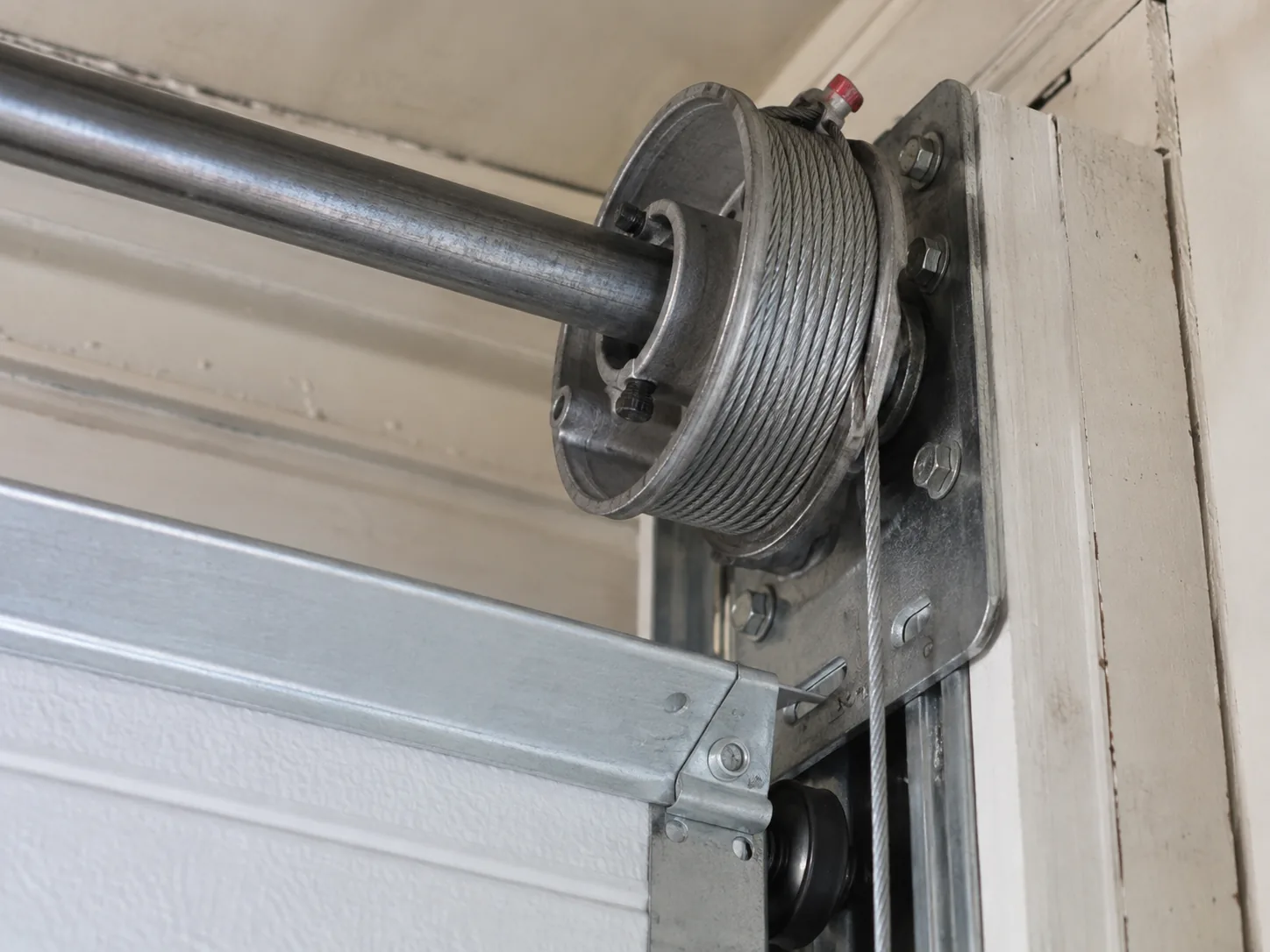
Spring balance, cable condition, track alignment, roller wear, and opener force and travel settings. On older hardware we also look for rust and fatigue that wouldn't show up on a newer door.
Explore more
Ready when you are
Gurnee Garage Door Pros repairs and installs garage doors, springs and openers in Gurnee, IL and the surrounding area.